



What's Happening?
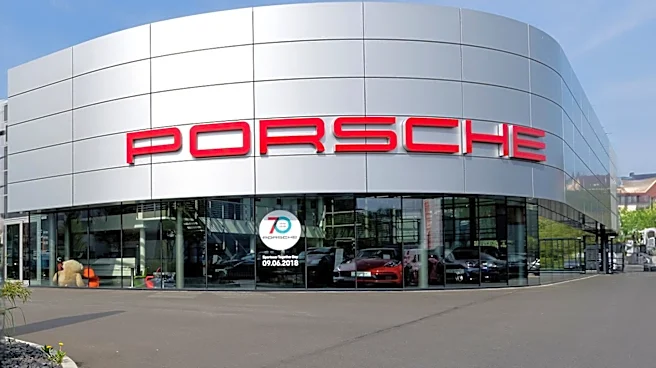
Porsche has reached an agreement with its German workforce that involves concessions in exchange for significant investment and job security until 2035. The agreement, known as the 'Future Package,' includes €2.1 billion of investment in the Zuffenhausen
and Weissach sites and plans for approximately 5,000 job reductions through voluntary departures and natural attrition. In return, workers will face delayed pay increases, reduced Christmas payments, and fewer mobile-working days. This deal highlights the negotiated cost of Europe's automotive transition, as Porsche aims to balance investment with workforce reductions amid weaker demand and the shift towards electrification.
Why It's Important?
The agreement is significant as it reflects the broader challenges faced by the European automotive industry, particularly in adapting to electrification and changing market dynamics. Porsche's strategy to secure jobs while reducing workforce numbers through voluntary means could serve as a model for other manufacturers. The deal underscores the pressures from weakened Chinese demand and the competitive landscape in electric vehicles. By negotiating these terms, Porsche aims to maintain profitability and industrial stability, which is crucial for its long-term competitiveness and the preservation of its German manufacturing base.
What's Next?
The agreement provides job security until 2035, but the real test will be whether Porsche's investments lead to competitive products and sustained demand. If successful, the settlement will be seen as a disciplined adjustment to market conditions. However, if demand continues to fall, Porsche may need to renegotiate terms with fewer options for savings. The company must navigate the complexities of funding new technologies while maintaining flexible production capabilities to adapt to uncertain transitions in powertrain technologies.
Beyond the Headlines
The deal highlights the role of German works councils and co-determination in negotiating industrial restructuring. While this approach can preserve skills and social stability, it also transfers risk to shareholders and may delay necessary changes. The agreement's success will depend on whether it supports flexible production and technological integration, which are essential for Porsche's competitiveness in the evolving automotive landscape.