





What's Happening?
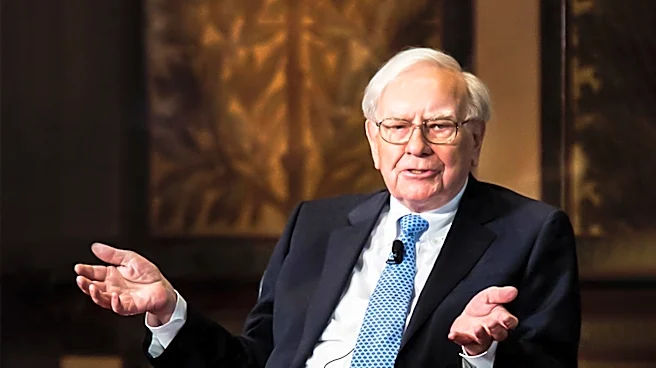
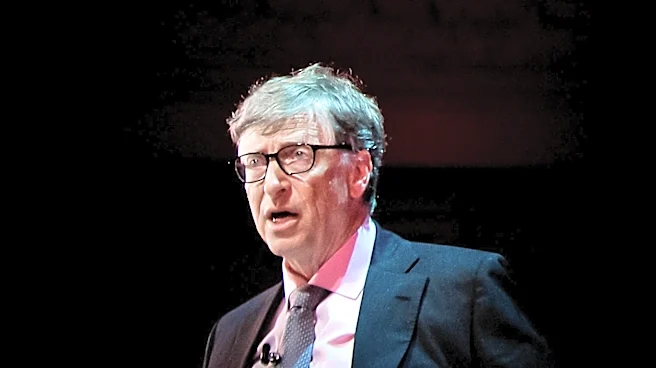
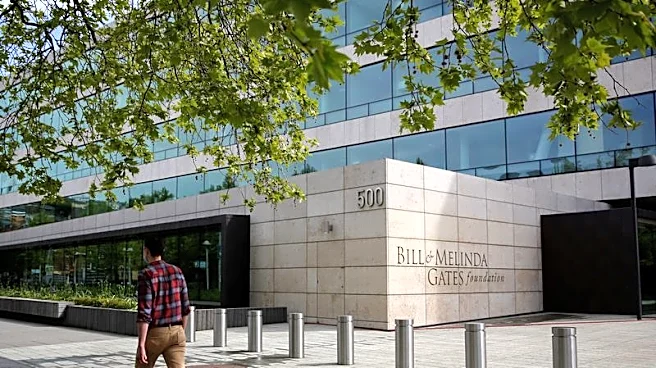
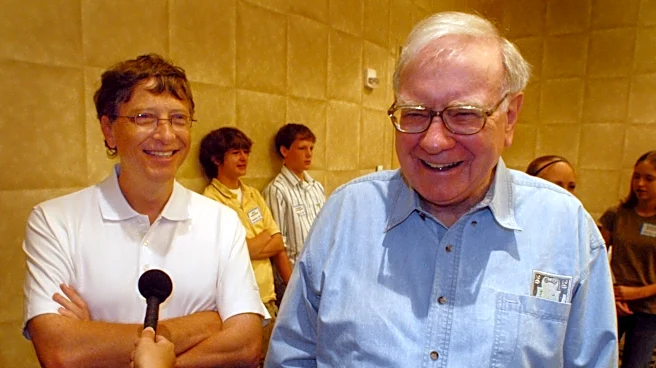
Warren Buffett, the renowned investor and chairman of Berkshire Hathaway, has announced that he will no longer include the Bill and Melinda Gates Foundation in his annual donations of Berkshire stock. This decision follows the publicized interactions
between Bill Gates and Jeffrey Epstein, although Gates has not been accused of any crimes. Buffett, who has donated over $47 billion to the Gates Foundation since 2006, will now focus his philanthropic efforts on four family foundations managed by his children. This shift is part of Buffett's broader plan to distribute his wealth, with an accelerated timeline for his remaining Berkshire shares to be distributed by 2034.
Why It's Important?
Buffett's decision to exclude the Gates Foundation from his donations is significant, as it reflects a strategic shift in his philanthropic priorities. The Gates Foundation, a major player in global health and development, will need to adjust to the absence of Buffett's substantial financial support. This move also highlights the potential reputational risks associated with high-profile associations, as seen in the fallout from Gates' ties to Epstein. For Buffett, this decision underscores a commitment to empowering his children to manage his philanthropic legacy, ensuring that his wealth is distributed according to his family's values and priorities.
What's Next?
As Buffett transitions his philanthropic focus to family-run foundations, these organizations may see an increase in their capacity to fund various initiatives. This shift could lead to changes in the types of projects and causes that receive support, potentially impacting the landscape of philanthropy. The Gates Foundation, meanwhile, will continue its work with a reduced financial inflow from Buffett, necessitating strategic adjustments to maintain its impact. The broader philanthropic community will be watching closely to see how these changes influence the foundation's operations and priorities.