




What's Happening?
James Dolan, the executive chairman of MSG Sports, has appointed his 32-year-old son, Quentin Dolan, to oversee the day-to-day operations of the New York Rangers. Quentin Dolan will serve as the president, COO, and alternate governor of the NHL team,
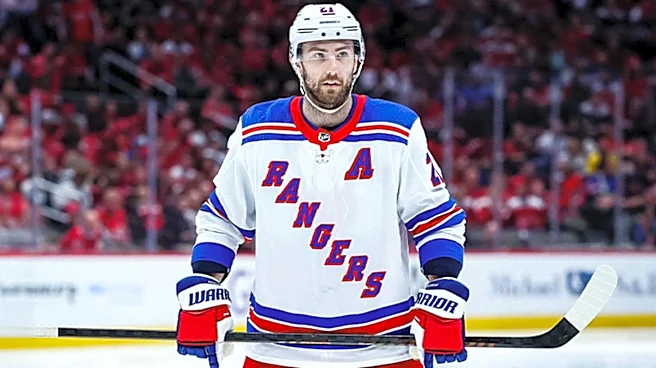
as well as its AHL affiliate, the Hartford Wolf Pack. This move marks a significant transition as James Dolan steps back from daily responsibilities. Quentin Dolan, who has been with MSG Sports since 2022, will continue his roles as senior VP of player performance and science leader for both the Rangers and the New York Knicks. Chris Drury, the Rangers' president and general manager, will maintain his hockey operations roles and report directly to Quentin Dolan. The team has missed the playoffs for two consecutive seasons, prompting a strategic retooling around core players and prospects.
Why It's Important?
The appointment of Quentin Dolan to a leadership role in the New York Rangers organization signifies a generational shift in the team's management. This decision could impact the team's strategic direction, especially as it seeks to rebuild and return to playoff contention. The move also highlights the influence of family legacy in sports management, with Quentin Dolan aiming to continue the legacy of his father and grandfather. For the Rangers, this leadership change could bring fresh perspectives and strategies, potentially affecting team performance and fan engagement. The broader sports industry may view this as a case study in succession planning and the integration of new leadership within established franchises.
What's Next?
Quentin Dolan's immediate focus will be on collaborating with Chris Drury and the coaching staff to strengthen the Rangers' competitive position. The team's management will likely evaluate current strategies and make necessary adjustments to improve performance. Fans and stakeholders will be watching closely to see how Quentin Dolan's leadership style and decisions influence the team's trajectory. The upcoming seasons will be critical in determining the success of this leadership transition and its impact on the Rangers' quest for a Stanley Cup.