





What's Happening?
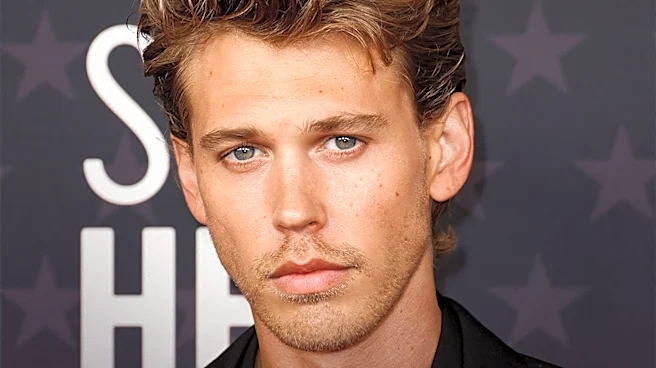
Actor Austin Butler recently appeared on the social media talk show 'SubwayTakes,' where he shared his perspective on embarrassment. During his segment, Butler stated, 'Embarrassment is an underexplored emotion.' He elaborated on this, suggesting that
the fear of embarrassment often prevents individuals from trying new things or expressing themselves, and from being judged socially. 'SubwayTakes,' filmed on the New York subway, features celebrities sharing their 'hot takes' or unpopular opinions. The show, created by Kareem Rahma, has gained significant traction, amassing 750 million views across approximately 760 episodes since its launch in 2023. It recently made history by receiving an Emmy nomination in the category of Outstanding Short Form Comedy, Drama or Variety Series, marking it as the first social media show to achieve this recognition. Other notable guests on the show have included Rosalía, Javier Bardem, and Matt Damon, each offering their unique perspectives on various topics.
Why It's Important?
Austin Butler's commentary on embarrassment highlights a broader societal issue regarding vulnerability and self-expression, particularly relevant in an era dominated by social media where public scrutiny is constant. His statement, 'Embarrassment is an underexplored emotion,' could resonate with many, encouraging a re-evaluation of how fear of judgment impacts personal and professional endeavors. For the entertainment industry, the success and Emmy nomination of 'SubwayTakes' signify a significant shift in content consumption and production. It demonstrates the growing influence of social media platforms as legitimate venues for high-quality, engaging content that can compete with traditional television. This trend could lead to more investment in social media-native shows, offering new opportunities for creators and a wider range of accessible content for audiences. The show's format, which emphasizes unscripted, authentic interactions, also reflects a demand for more genuine celebrity engagement, moving away from highly polished, traditional media appearances.
What's Next?
The Emmy nomination for 'SubwayTakes' is a pivotal moment for social media-native content, potentially paving the way for more digital productions to receive mainstream industry recognition. The show is set to compete against established programs like Netflix’s 'Bad Thoughts' and 'Colbert Before Air' on September 15. Regardless of the outcome, the nomination itself validates the artistic and entertainment value of content produced specifically for platforms like TikTok, Instagram, and YouTube. This could encourage other content creators and media companies to invest further in short-form, platform-specific programming, potentially leading to a new wave of innovative digital talk shows and series. The continued success of 'SubwayTakes' may also influence how celebrities engage with their audiences, favoring more informal and direct interactions over traditional promotional tours. Creator Kareem Rahma's vision of being an entertainer through accessible, real-world content suggests a future where the lines between traditional and digital entertainment continue to blur.
Beyond the Headlines
The rise of 'SubwayTakes' and its Emmy nomination underscore a profound shift in the media landscape, challenging traditional notions of what constitutes 'television' and 'entertainment.' This development has broader implications for intellectual property, content monetization, and the career paths of entertainers and creators. The show's success, built on a simple yet effective format filmed in a public space, highlights the power of authenticity and accessibility in capturing audience attention. It also raises questions about the future of traditional media, as digital platforms offer lower barriers to entry and direct audience engagement. Furthermore, the show's ability to attract A-list celebrities to an unconventional setting suggests a changing dynamic in celebrity culture, where stars are increasingly willing to participate in less formal, more 'real' interactions. This could lead to a more democratized entertainment ecosystem, where innovative ideas and direct audience connection are prioritized over large budgets and established networks.