




What's Happening?
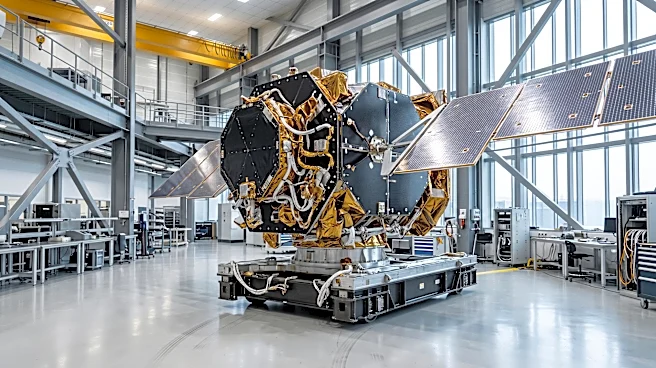
K2 Space, a U.S. satellite manufacturer founded by former SpaceX engineers, has integrated Asynchronics' NeXosim simulation framework into its operations. This framework is being used by K2 Space to build internal simulation infrastructure, facilitating
both hardware-in-the-loop and software-only testing for its satellite manufacturing processes. The adoption of NeXosim allows K2 Space to conduct comprehensive testing of complex spacecraft systems before physical hardware is fully available, addressing a common bottleneck in the satellite development industry. This approach enables engineers to validate system behavior much earlier in the development cycle, potentially reducing delays and financial losses associated with late-stage problem discovery. The technology focuses on modeling how spacecraft components behave, communicate, and interact, rather than just physical properties.
Why It's Important?
The utilization of advanced simulation frameworks like NeXosim by U.S. manufacturers such as K2 Space is crucial for the evolution of the domestic space industry. By enabling earlier and more thorough testing of satellite systems, this technology can significantly reduce development costs and accelerate the time-to-market for new spacecraft. This is particularly important in a sector where the cost of failure is exceptionally high and hardware is expensive. For U.S. industries, this means enhanced competitiveness in the global satellite market, fostering innovation, and potentially creating more robust and reliable space infrastructure. Companies like K2 Space, by adopting such solutions, stand to gain from increased efficiency and reduced risks, while the broader U.S. economy benefits from a more dynamic and advanced aerospace sector. The ability to test hundreds of potential failure scenarios virtually also improves the overall quality and safety of satellite deployments.
What's Next?
The continued adoption of simulation frameworks like NeXosim by U.S. satellite manufacturers is likely to drive further advancements in spacecraft development methodologies. As more manufacturers integrate these tools, there could be a broader shift towards software-defined and autonomous physical systems across various industries, including defense platforms, industrial robots, and autonomous vehicles. Asynchronics is also developing a marketplace, NeXosim.io, where hardware manufacturers can provide certified digital twins of their components. This initiative could streamline the integration process for satellite builders, allowing them to license existing models rather than creating them from scratch. This ecosystem approach could lead to a more standardized and efficient development process within the U.S. space industry, with potential for recurring software revenue through licensing and specialized engineering services.
Beyond the Headlines
The deeper implications of K2 Space's adoption of NeXosim extend to the broader concept of 'digital twins' and their role in modern engineering. This technology represents a shift from traditional physical testing to a more integrated virtual and physical validation process. The focus on 'behavioral digital twins'—models that reproduce how systems function, communicate, and respond to events—highlights a critical evolution in simulation. This approach is not merely about visual or geometric representations but about understanding the intricate interactions between software and subsystems. This paradigm shift has ethical and legal dimensions, particularly concerning the reliability and certification of virtual models in mission-critical applications. Long-term, this development could trigger a cultural shift in engineering, where virtual validation becomes as fundamental as physical prototyping, influencing how complex systems are designed, validated, and deployed across multiple high-stakes sectors beyond space.