



What's Happening?
Kreios Space, a Spanish company, plans to launch the world's first satellite using air-breathing electric propulsion (ABEP) technology. This innovative system uses air from Earth's atmosphere, which is heated, ionized, and expelled to generate thrust.
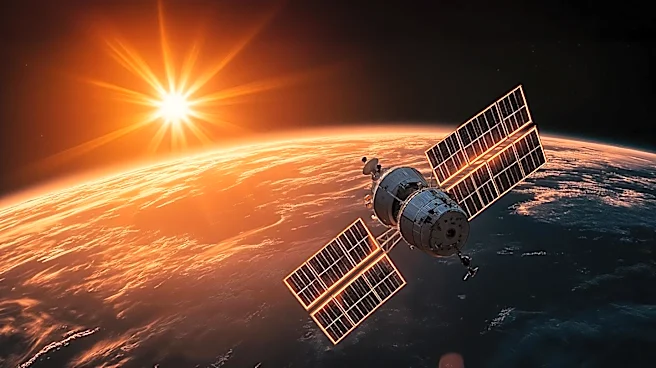
The satellite will operate in very low Earth orbit (VLEO), allowing it to counteract atmospheric drag without liquid fuel. Kreios Space has partnered with Kongsberg NanoAvionics to provide the satellite bus for this mission. The company aims to enable more efficient and sustainable satellite operations in VLEO, offering higher-resolution Earth observation and improved satellite communications.
Why It's Important?
The development of ABEP technology represents a significant advancement in satellite propulsion, potentially reducing reliance on traditional fuels and enabling longer missions in VLEO. This could lead to more sustainable and cost-effective satellite operations, benefiting industries reliant on satellite data, such as telecommunications and Earth observation. The success of this technology could also spur further innovation in satellite design and propulsion, influencing the future of space exploration and commercial satellite deployment.
What's Next?
Kreios Space plans to conduct a test run of the ABEP system, although a specific launch date has not been announced. The company aims to launch the satellite by 2027, aligning with growing interest in VLEO technologies. If successful, this mission could pave the way for broader adoption of air-breathing propulsion systems in the satellite industry. Stakeholders in the space industry will likely monitor the test results closely, as they could impact future satellite design and operational strategies.