






What's Happening?
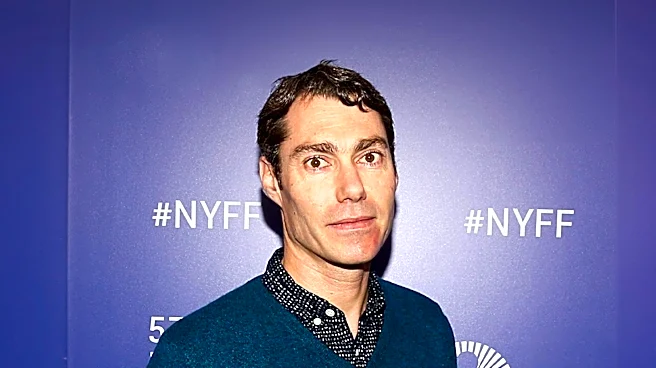
Jonah Hauer-King, who portrayed Prince Eric in Disney's 2023 live-action remake of 'The Little Mermaid,' has publicly stated his willingness to return for a potential sequel. In an exclusive interview with Screen Rant, Hauer-King expressed his affection
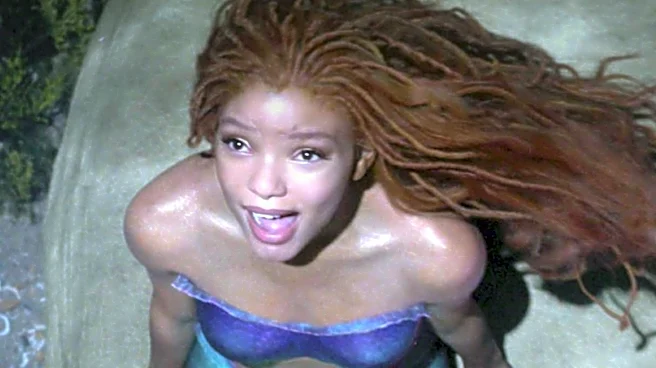
for co-star Halle Bailey and his positive experience working on the first film, indicating he is 'down' if a sequel moves forward. This sentiment aligns with previous expressions of interest from other key figures involved in the initial production, including director Rob Marshall and lead actress Halle Bailey. Despite the first film's mixed financial results, which reportedly led to a $5 million loss after its $200 million budget and other costs, the enthusiasm from the cast and crew suggests a desire to continue the story. Disney has not yet officially greenlit a sequel, and the studio may be exercising caution given the financial performance of the first movie and the less-than-stellar reception of the animated 'The Little Mermaid II' from 2000.
Why It's Important?
The potential for a sequel to Disney's live-action 'The Little Mermaid' carries significant implications for the entertainment industry, particularly for Disney's strategy of remaking its animated classics. While the first film garnered substantial box office revenue, its reported net loss highlights the financial risks associated with high-budget productions, even for established franchises. A sequel, if greenlit, would indicate Disney's continued commitment to this live-action remake model, potentially influencing future investment decisions in similar projects. The expressed enthusiasm from the lead actors and director could be a crucial factor in building public and investor confidence, suggesting a strong creative vision for a follow-up. Conversely, if Disney opts against a sequel, it could signal a re-evaluation of their live-action remake approach, potentially leading to more stringent financial and critical performance benchmarks for future adaptations. The success or failure of a 'Little Mermaid' sequel could therefore serve as a bellwether for the broader trend of live-action remakes in Hollywood, impacting production budgets, casting choices, and storytelling directions across the industry.
What's Next?
The immediate next step for a 'Little Mermaid' sequel would involve Disney officially greenlighting the project. This decision would likely hinge on a comprehensive evaluation of the first film's long-term financial performance, streaming viewership, and overall brand impact, rather than solely its initial box office returns. Should a sequel be approved, the involvement of key original cast members like Jonah Hauer-King and Halle Bailey, along with director Rob Marshall, would likely be prioritized to maintain continuity and capitalize on the established fan base. The development process would then involve scriptwriting, with potential consideration given to the plot of the animated 'The Little Mermaid II: Return to the Sea,' which focused on Ariel and Eric's daughter. However, given the mixed reception of the animated sequel, a new narrative direction might be explored. Disney's busy pipeline of other live-action remakes, including 'Tangled' and 'Lilo and Stitch 2,' suggests that any 'Little Mermaid' sequel would join a crowded schedule, indicating a potentially lengthy development and production timeline before an official release date is announced.
Beyond the Headlines
Beyond the immediate box office considerations, the discussion around a 'Little Mermaid' sequel touches upon broader cultural and artistic implications within the entertainment landscape. Disney's live-action remakes often face scrutiny regarding their ability to capture the magic of the originals while offering fresh perspectives. A sequel would present an opportunity to further develop the characters and world established in the 2023 film, potentially exploring themes of family, identity, and environmentalism in new ways. The casting of Halle Bailey as Ariel, a significant step towards greater representation, would continue to resonate in a sequel, reinforcing the importance of diverse storytelling in mainstream cinema. However, the challenge remains in crafting a narrative that justifies its existence beyond mere commercial extension, especially given the lukewarm reception of the original animated sequel. The creative team would need to navigate fan expectations, critical reception, and the evolving landscape of cinematic storytelling to produce a film that is both financially viable and artistically compelling, contributing meaningfully to the legacy of 'The Little Mermaid' franchise.