




What's Happening?
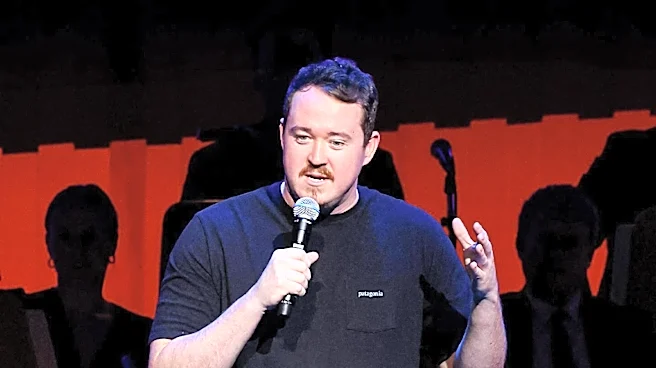
Comedian Shane Gillis, during his third appearance hosting 'Saturday Night Live' (SNL) on October 10, 2026, made controversial remarks about women's attire at the gym, stating they 'just dress like whores now.' This comment has ignited significant public
backlash, particularly due to its timing amidst widespread social media discussions surrounding 'The Cornell Seven' case, which has brought conversations about rape culture to the forefront. Gillis has a history of controversy, having been fired from SNL in 2019 after only five days due to the resurfacing of a 2018 podcast clip containing derogatory language, including Asian ethnic slurs. Despite his previous removal, he returned to host the show, leading to renewed scrutiny over his comedic content and its implications. Tony Maglio of The Hollywood Reporter noted that the joke was ill-timed, given the ongoing public discourse.
Why It's Important?
The controversy surrounding Shane Gillis's SNL monologue highlights the ongoing tension between comedic freedom and social responsibility in U.S. entertainment. His remarks have fueled discussions about misogyny and rape culture, particularly as they occurred during a period of heightened public awareness due to 'The Cornell Seven' case. This incident underscores the significant influence of national television platforms like SNL and the potential for comedians' words to impact public discourse and perceptions. For the entertainment industry, it raises questions about vetting processes for hosts and the boundaries of acceptable humor. The backlash from figures like 'Schitt’s Creek' star Dan Levy, who condemned the comments as misogynistic and linked them to complacency regarding sexual assault, indicates a broader societal demand for accountability from public figures and media organizations. This event could influence how networks approach controversial content and talent in the future.
What's Next?
The immediate aftermath of Shane Gillis's comments will likely involve continued public debate and scrutiny from media critics and social commentators. SNL and its executive producer, Lorne Michaels, may face pressure to address the controversy, potentially influencing future hosting choices or content guidelines. The incident could also prompt further discussions within the comedy community regarding the role of comedians in addressing sensitive social issues and the line between edgy humor and offensive content. Stakeholders, including advocacy groups and public figures, are expected to continue voicing their opinions, potentially leading to calls for greater accountability from broadcast networks. The ongoing conversation around rape culture, amplified by 'The Cornell Seven' case, suggests that the implications of Gillis's remarks will resonate beyond the entertainment sphere, impacting broader societal dialogues about gender respect and appropriate public discourse.
Beyond the Headlines
This incident delves into deeper implications concerning the evolving landscape of comedy and its intersection with cultural sensitivity and social justice movements in the U.S. The repeated controversies involving Shane Gillis, from his 2019 firing over ethnic slurs to his recent remarks on SNL, highlight a persistent challenge for the entertainment industry in balancing artistic expression with public expectations of inclusivity and respect. It raises fundamental questions about whether certain forms of humor perpetuate harmful stereotypes or contribute to a culture of misogyny. The strong reactions from both the public and fellow celebrities suggest a growing intolerance for jokes perceived as offensive, particularly when they touch upon sensitive topics like sexual assault and gender inequality. This ongoing dialogue could lead to a re-evaluation of comedic standards and practices, potentially influencing how comedians approach their material and how networks curate their content to align with contemporary social values.