
What's Happening?
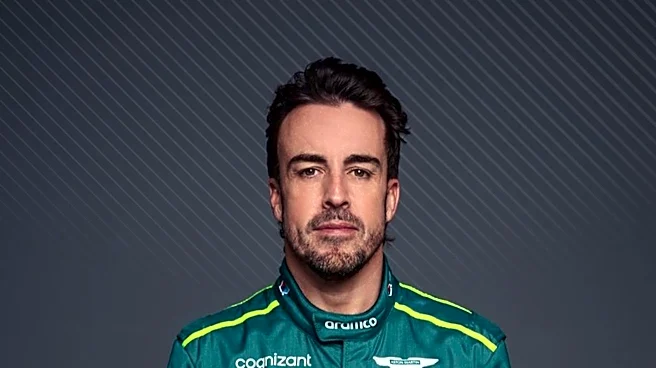
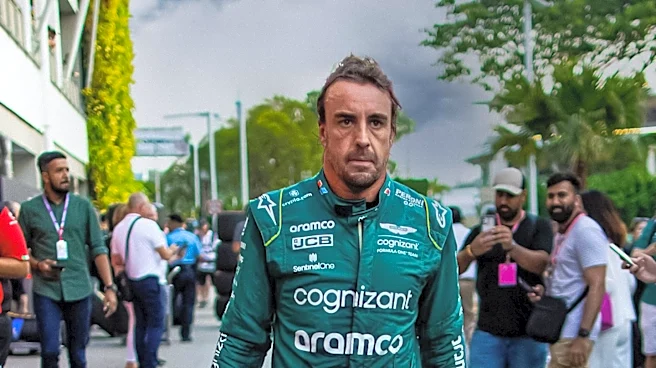
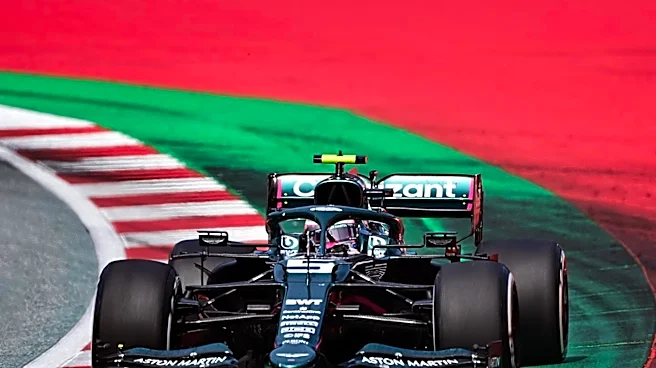
Fernando Alonso has voiced his complete 'faith' in Honda to deliver a more competitive and reliable engine for Aston Martin in the 2027 Formula 1 season. This comes after a challenging debut campaign for the Aston Martin-Honda partnership, which has been
plagued by reliability issues and poor performance from the Honda powertrain, resulting in only seven points and the team ranking ninth in the Constructors' standings. Alonso, who has signed a new deal to continue with Aston Martin into 2027, believes that the 'completely new engine' currently undergoing dyno testing will mark a significant improvement. He noted that while the power unit department is aware of the current problems, the car's chassis side is 'really going in the right direction,' giving him hope for next year.
Why It's Important?
Fernando Alonso's public expression of faith in Honda is crucial for the Aston Martin team, as it signals confidence in their long-term technical partnership despite current struggles. The performance of the power unit is a critical determinant of success in Formula 1, and a reliable, competitive engine is essential for Aston Martin to climb the Constructors' standings. For Honda, this commitment from a two-time world champion like Alonso provides motivation and validation for their ongoing development efforts. The prospect of a 'completely new engine' for 2027 suggests a significant investment in R&D, which could lead to technological advancements that benefit both the racing program and Honda's broader automotive innovations. The success of this partnership could also influence future collaborations between engine manufacturers and F1 teams.
What's Next?
The focus for Aston Martin and Honda will now be on the development and testing of the new 2027 engine. Alonso's comments indicate that the power unit department is actively addressing current issues, with dyno testing already underway. The team will need to ensure that the new engine not only delivers increased power but also significantly improved reliability to avoid a repeat of the current season's struggles. The chassis development, which Alonso noted is progressing well, will need to integrate seamlessly with the new power unit. The coming seasons will be a critical test for this partnership, as they aim to translate their combined efforts into on-track success and challenge the front-running teams. The performance in 2027 will be a key indicator of the partnership's long-term viability.
Beyond the Headlines
Alonso's situation with Honda echoes his past experiences with McLaren, where a previous partnership with the Japanese manufacturer also faced significant challenges. This historical context adds a layer of intrigue to his renewed faith, suggesting a belief in Honda's capacity for improvement despite past difficulties. The emphasis on a 'completely new engine' for 2027 highlights the cyclical nature of innovation in Formula 1, where major rule changes often necessitate ground-up redesigns. This continuous pursuit of technological advancement drives not only sporting competition but also pushes the boundaries of engineering and materials science. The success or failure of this partnership will not only impact Aston Martin's standing but also serve as a case study in managing high-stakes technical collaborations in a rapidly evolving technological landscape.