






What's Happening?
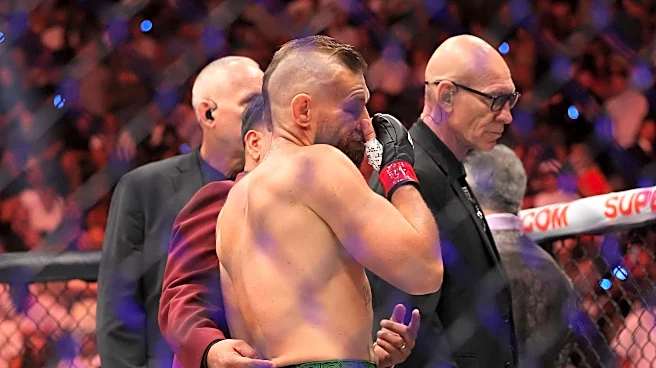
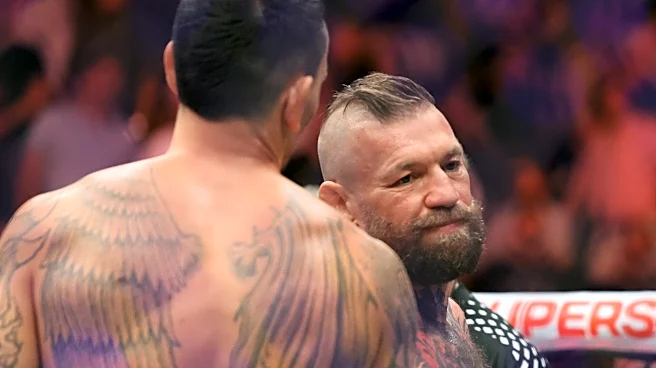
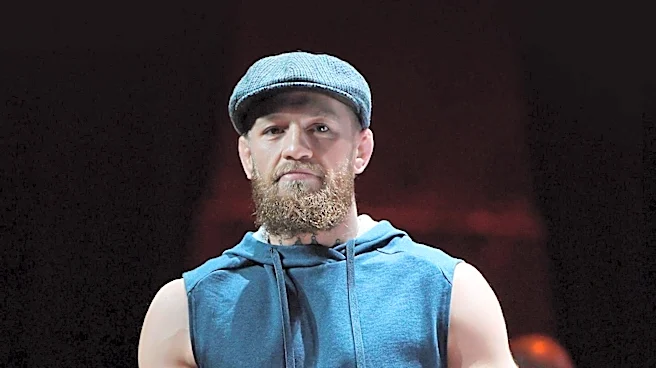
Conor McGregor, the renowned UFC fighter, recently suffered a knee injury during his comeback fight at UFC 329 against Max Holloway. The injury, which occurred on the first kick of the match, was initially reported as an ACL and meniscus tear, sidelining
McGregor for a year. However, recent videos posted by McGregor showing him working out have sparked skepticism about the severity of his injury. Dr. Brian Sutterer, known for analyzing UFC injuries, commented on McGregor's recovery, noting the impressive range of motion and lack of swelling in the knee, which is atypical for a full ACL rupture. Sutterer speculated that McGregor might have a less severe sprain rather than a complete tear, raising questions about the initial diagnosis.
Why It's Important?
The scrutiny over McGregor's injury highlights the intense public and professional interest in the health and performance of high-profile athletes. If McGregor's injury is less severe than initially reported, it could accelerate his return to the octagon, impacting the UFC's event planning and marketing strategies. Additionally, the situation underscores the challenges in diagnosing and managing sports injuries, where public perception and medical realities may not always align. The outcome of McGregor's recovery could influence how similar injuries are perceived and treated in the future, affecting athletes, medical professionals, and sports organizations.
What's Next?
As McGregor continues his recovery, the UFC and his management team will likely monitor his progress closely to determine a realistic timeline for his return. If McGregor's injury is indeed less severe, he could potentially resume training and competition sooner than expected, which would be a significant development for his career and the UFC's event lineup. Fans and analysts will be watching for official updates on his condition and any announcements regarding his next fight. The situation may also prompt discussions within the sports medicine community about injury assessment and rehabilitation protocols.