



What's Happening?
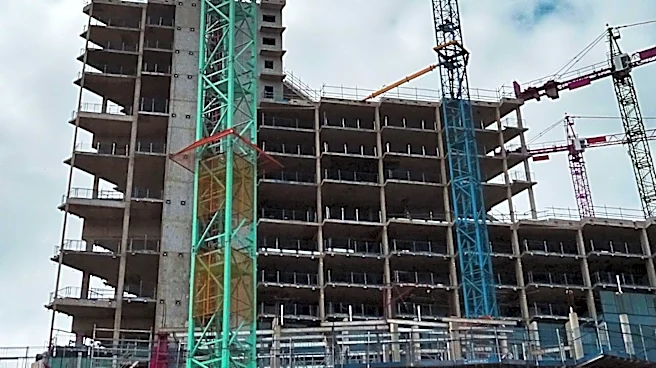
Elon Musk's ambitious Terafab project is set to become the largest chip manufacturing facility in the world, surpassing the size of the Pentagon, Apple Park, and Giga Texas combined. The facility, with a projected floor space of over 100 million square
feet, will integrate all aspects of chip production, including logic and memory chips, lithography, packaging, and testing. The project aims to address the growing demand for compute power from SpaceX and Tesla, which require significant chip supply. Despite the challenges, Musk is committed to investing substantial resources into the project, which is expected to require up to $119 billion in investments.
Why It's Important?
The Terafab project represents a significant leap in chip manufacturing capabilities, potentially transforming the semiconductor industry. By consolidating all production processes under one roof, the facility aims to enhance efficiency and reduce supply chain complexities. This development is crucial for companies like SpaceX and Tesla, which rely heavily on advanced chips for their operations. The project's success could set a new standard for chip manufacturing, influencing industry practices and competitive dynamics. Additionally, the scale and ambition of the Terafab project highlight the increasing importance of semiconductor technology in driving innovation and economic growth.
What's Next?
As construction progresses, the Terafab project will face several challenges, including securing the necessary investments and overcoming technical hurdles. The facility's success will depend on its ability to meet the high demand for chips and deliver on its promise of integrated production. Industry stakeholders will be closely monitoring the project's development, as its impact could extend beyond the semiconductor sector, affecting technology and manufacturing industries globally. The project's outcome may also influence future investments in large-scale manufacturing facilities and shape the strategic direction of companies involved in chip production.