
What's Happening?
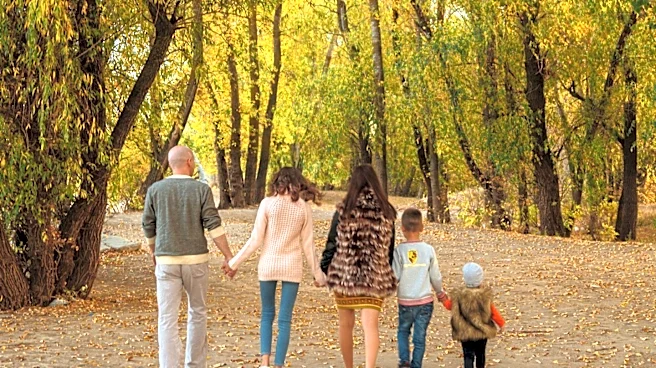
A growing number of Americans are opting for 'Campsgiving,' 'Vansgiving,' or 'Glampsgiving'—camping during the Thanksgiving holiday—instead of traditional family gatherings. This trend, which saw a significant
boost during the pandemic, continues to rise, with camping website The Dyrt reporting a roughly 15% jump in Thanksgiving camping between 2022-2023, followed by annual increases. Kevin Long, CEO of The Dyrt, notes that cooler weather and less competition for campsites are key attractions. Many 'Campsgiving' participants prefer RVs or vans for convenience, and these trips tend to be longer, averaging three nights. California state parks saw approximately 70% occupancy during Thanksgiving week last year, a high figure for November, though beachfront campsites remain highly competitive. Glamping resorts are also catering to this trend, offering curated experiences with prepared meals and activities.
Why It's Important?
This shift in holiday tradition has significant implications for the U.S. tourism and outdoor recreation industries. The increasing popularity of 'Campsgiving' drives demand for campsites, RV rentals, and outdoor gear, benefiting businesses in these sectors. It also highlights a changing cultural preference, with more individuals and families seeking alternative, often more relaxed and nature-focused, ways to celebrate holidays. This trend can alleviate some of the pressure on traditional travel infrastructure, such as airports and hotels, during one of the busiest travel periods. However, it also places increased demand on national and state parks, requiring robust management of resources and facilities to accommodate the influx of visitors while preserving natural environments. The rise of 'glamping' further indicates a desire for outdoor experiences with enhanced comfort, expanding the market for upscale camping options.
What's Next?
The 'Campsgiving' trend is expected to continue its upward trajectory, prompting campgrounds and glamping resorts to further expand their offerings and amenities to cater to this growing market. National and state park systems may need to adapt their reservation systems and infrastructure to manage increased demand during the Thanksgiving period, potentially exploring new booking windows or capacity limits. Retailers specializing in outdoor equipment and RVs will likely see sustained sales growth. Additionally, the culinary industry might see an increase in demand for portable or pre-prepared Thanksgiving-themed meals suitable for camping. The long-term impact could include a broader redefinition of holiday traditions, with outdoor activities becoming a more integral part of American celebrations.
Beyond the Headlines
Beyond the economic and logistical impacts, the 'Campsgiving' phenomenon reflects deeper societal shifts, including a desire for simpler, more authentic experiences and a growing appreciation for nature. For some, it offers an escape from the pressures and complexities of traditional family gatherings, fostering a 'chosen family' vibe, as noted by Teresa Raffo, owner of Mendocino Grove. The pandemic accelerated this trend by encouraging outdoor activities as a safe alternative, but its continued growth suggests a lasting change in lifestyle preferences. This movement also underscores a broader cultural re-evaluation of consumption and experiences, prioritizing connection with nature and personal well-being over conventional holiday rituals. It highlights a growing segment of the population that values solitude, adventure, and environmental engagement, even during traditionally home-centric holidays.