




What's Happening?
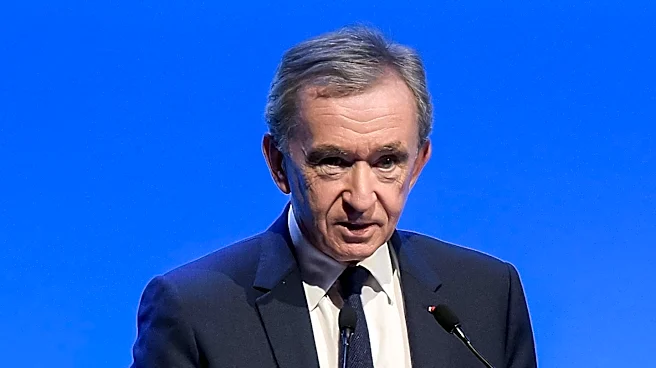
Bernard Arnault is moving to consolidate his family's control over LVMH Moët Hennessy Louis Vuitton through a merger agreement between Christian Dior Couture and Agache, his family's primary holding company. The plan involves Christian Dior absorbing
Agache in a share-for-share merger, with each Agache share being swapped for 17.4 new Dior shares. This reorganization aims to streamline the family's ownership structure by collapsing two intermediate holding tiers above LVMH into a single listed entity, which will trade under the Agache name. The resulting holding company will directly control just under 50% of LVMH's capital and nearly 66% of its voting rights. Including the wider Arnault family group, the stake will exceed 50% of the capital and more than 66% of the votes. Bernard Arnault is slated to remain the personally liable partner, ensuring his continued direct management of the holding's affairs. The deal requires approval from shareholder meetings of both companies and relief from mandatory tender offers from the French market regulator AMF.
Why It's Important?
This consolidation is significant because it formally entrenches the Arnault family's long-term control over LVMH, one of the world's largest luxury conglomerates. By securing a two-thirds voting majority, the family ensures uninterrupted influence over LVMH's board appointments, strategic direction, and major corporate decisions. While the reorganization primarily affects the ownership structure above LVMH, it reinforces stability at the top of the luxury group, which could be viewed positively by investors seeking consistent leadership. For minority shareholders in Christian Dior, their capital stake will slightly decrease, and their influence in the new partnership limited by shares will be minimal, as management will reside with the personally liable partner. This move underscores a trend among family-controlled conglomerates to solidify dynastic control, ensuring continuity and long-term vision in their business empires.
What's Next?
The proposed merger is not yet finalized. Shareholder meetings for both Christian Dior and Agache must approve the deal. Additionally, the French market regulator AMF needs to grant relief from mandatory tender offers that would typically be triggered by such a merger for Dior and LVMH. Investors are expected to receive detailed transaction documents by November 30, which will outline the specific governance rules of the new partnership limited by shares. Following the change in legal form, a cash offer from the Arnault family group for the remaining Dior shares is planned, though a subsequent squeeze-out is not envisaged. The market will also be watching for any potential impact on LVMH's stock performance, especially given recent concerns flagged by Jefferies regarding potential risks to U.S. demand for luxury goods due to volatility in technology shares.
Beyond the Headlines
This strategic move by Bernard Arnault highlights the intricate mechanisms used by ultra-wealthy families to maintain generational control over vast business empires. The choice of a partnership limited by shares as the legal form is crucial, as it allows for centralized control by the personally liable partner, effectively insulating leadership from the capital stake of other shareholders. This structure prioritizes long-term family vision over short-term market pressures, a common characteristic of many European luxury houses. The consolidation also reflects a broader trend of luxury brands adapting to global economic shifts, such as potential slowdowns in key markets like the U.S. and the strategic expansion into emerging markets like China, where LVMH brands like Hennessy and Dior are planning significant new ventures. The move ensures that LVMH's strategic responses to these market dynamics will remain firmly under the Arnault family's direction.