

What's Happening?
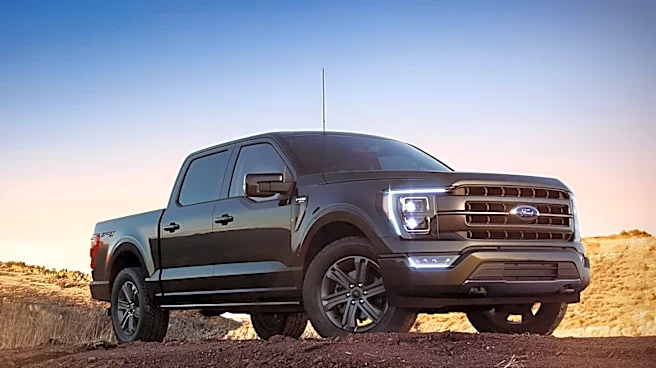
Ford has introduced a new solution for backup power using its F-150 PowerBoost hybrid and F-150 Lightning electric pickup trucks. These vehicles can now be connected directly to a home's electric meter to provide power during outages. This setup involves
a one-foot adapter and a longer cable that connects to a transfer switch on the electric meter, allowing homeowners to manage which devices receive power. The Lightning model can power a home for two to three days, while the PowerBoost Hybrid can last up to five days on a single tank of gas. This solution is presented as a cost-effective alternative to traditional generators, with installation costs starting around $1,100. Ford's initiative is part of a broader trend among automakers to leverage electric vehicle technology for home energy solutions.
Why It's Important?
This development is significant as it represents a shift in how automakers are utilizing electric vehicle technology beyond transportation. By offering a backup power solution, Ford is tapping into a growing market for home energy resilience, especially in areas prone to power outages. This approach not only provides a practical use for electric vehicles but also positions Ford as a leader in integrating vehicle technology with home energy systems. The move could influence other automakers to explore similar solutions, potentially leading to increased adoption of electric vehicles as multi-functional assets. Additionally, this innovation could drive consumer interest in electric vehicles by highlighting their versatility and cost-saving potential.
What's Next?
Ford's solution currently applies to about 200,000 vehicles and is expected to expand as more models become compatible. The company also offers a Home Integration System for bidirectional power flow, which could further enhance the utility of electric vehicles in home energy management. As the technology develops, regulatory and safety standards will need to be addressed, and utility companies will play a crucial role in facilitating these systems. The success of Ford's initiative may prompt other automakers to accelerate their own vehicle-to-home power solutions, potentially leading to broader industry changes in how electric vehicles are marketed and utilized.