






What's Happening?
Celero Communications, a two-year-old chip startup based in Irvine, California, has successfully raised $275 million in a Series C funding round, bringing its total funding to $415 million and valuing the company at over $3 billion. The funding round was
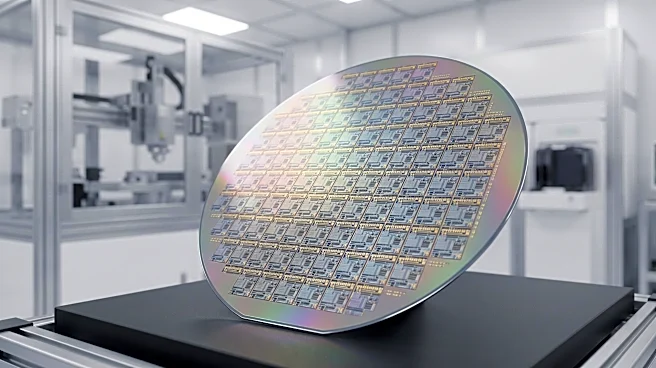
co-led by Atreides Management, Valor Equity Partners, and CapitalG (Alphabet’s growth fund), with participation from existing investors Sutter Hill Ventures and Maverick Silicon. Celero specializes in developing coherent digital signal processors (DSPs) that encode data onto light, enabling more data to travel further through fiber optic cables. These processors are designed to connect AI chips, racks, and entire data centers, addressing the growing bottleneck in data transfer as AI clusters expand. The company argues that the current method, PAM4, is becoming insufficient for the demands of large AI infrastructure, advocating for coherent optics at every scale. Celero has validated the industry's first coherent DSP made on a 2-nanometer process, utilizing TSMC's advanced technology, and aims to move into production next year.
Why It's Important?
This significant investment in Celero highlights a critical and rapidly growing need within the U.S. technology sector: the efficient transfer of data between AI chips and data centers. As artificial intelligence workloads become more complex and data-intensive, the speed and capacity of interconnects are becoming a major limiting factor for AI infrastructure performance. Celero's technology, which aims to replace traditional electrical signaling with light-based coherent optics, could unlock substantial gains in data transfer speeds and efficiency. This development is crucial for U.S. companies heavily invested in AI, including cloud providers and tech giants, as it directly impacts their ability to scale AI operations and maintain competitive advantages. The investment also underscores the broader trend of substantial capital flowing into companies that provide foundational technologies for the AI boom, indicating a strategic focus on overcoming infrastructure bottlenecks to support future AI advancements. The success of companies like Celero is vital for the continued growth and innovation of the U.S. AI industry.
What's Next?
Celero plans to allocate the newly acquired funds towards its product roadmap, research and development, and preparing for production. The company's immediate next step is to finalize the design of its 2-nanometer coherent DSP and commence production, with a target of next year. While Celero has not yet named specific customers, it is reportedly targeting major cloud providers, indicating a strategic focus on large-scale data center deployments. The company will face competition from established players in the market, including Marvell, Broadcom, and Cisco, and will need to ensure its chips can integrate seamlessly with existing equipment. The entry of Atreides Management's Gavin Baker to Celero's board suggests a strong strategic backing for the company's future direction. The market will closely watch for the first cloud provider to adopt Celero's technology, which will serve as a key indicator of the broader industry's acceptance of coherent optics for intra-data center connections.
Beyond the Headlines
The substantial investment in Celero reflects a deeper understanding within the tech industry that the future of AI is not solely dependent on the power of individual processing units, but equally on the efficiency of their communication. The shift from electrical to optical interconnects, particularly coherent optics, represents a fundamental architectural change in data centers. This evolution could lead to more energy-efficient data centers, reducing the environmental footprint of AI, which is a growing concern. Furthermore, the ability to move vast amounts of data at unprecedented speeds could enable new paradigms in distributed AI computing, potentially leading to more sophisticated and responsive AI models. The competition in this space, involving both startups and established giants, highlights a critical technological arms race to build the foundational infrastructure for the next generation of artificial intelligence, with significant implications for national technological leadership and economic competitiveness.