








What's Happening?
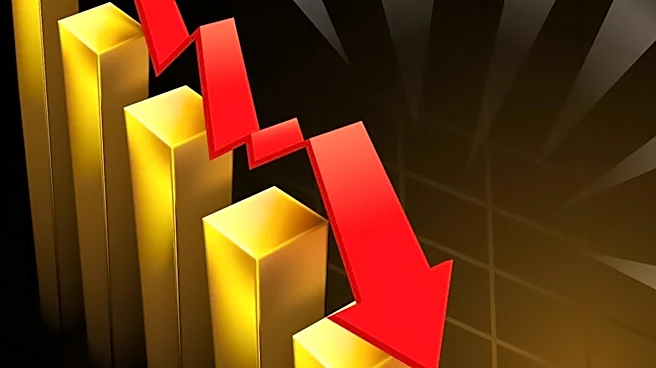
Gold and silver prices have weakened following the North American cash-market close, influenced by Federal Reserve tightening and rising Treasury yields. Spot gold was trading at approximately $4,015.60 per ounce, down 1.79%, while spot silver was at $58.18,
down 1.48%. The Federal Reserve's recent decision to maintain the target range at 3.50% to 3.75% has led to a repricing in the market, with the 10-year Treasury yield rising to 4.377% and the two-year yield holding above 4.10%. This has overshadowed the safe-haven demand for precious metals, despite ongoing U.S.-Iran tensions. The market's focus remains on the Federal Reserve's actions, with oil prices also contributing to inflation-risk hedges.
Why It's Important?
The weakening of gold and silver prices highlights the significant impact of Federal Reserve policies on the commodities market. As the Federal Reserve continues to tighten monetary policy, the opportunity cost of holding non-yielding assets like gold increases, leading to reduced investment demand. This situation underscores the delicate balance between managing inflation and supporting economic growth. The rising Treasury yields reflect investor expectations of future interest rate hikes, which could further influence market dynamics. The ongoing geopolitical tensions, particularly involving the U.S. and Iran, add another layer of complexity, affecting global oil prices and, consequently, inflation expectations.
What's Next?
The market will closely monitor the Federal Reserve's future policy decisions, especially regarding interest rate adjustments. Any changes in the geopolitical landscape, such as developments in U.S.-Iran relations, could also impact market sentiment and commodity prices. Investors may need to reassess their portfolios in light of these evolving economic conditions, balancing risk and return in a potentially volatile environment.