






What's Happening?
The Ninth Circuit Court of Appeals has issued a significant ruling in the case of Holland-Thielen, et al. v. SpaceX, affirming the denial of SpaceX’s motion to compel arbitration. The court held that the Ending Forced Arbitration of Sexual Assault and Sexual Harassment
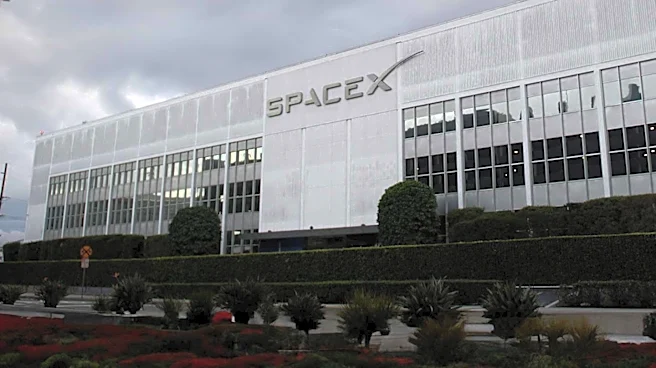
Act of 2021 (EFAA) does not require a plaintiff to plead facts sufficient to state a sexual harassment claim under Federal Rule of Civil Procedure 12(b)(6) to invoke the EFAA and avoid arbitration. This decision conflicts with a previous approach by some courts in the Ninth Circuit that required a plausible sexual harassment claim to trigger the EFAA. The case involved eight former SpaceX employees who alleged widespread sexualized and discriminatory conduct at the company, including online posts by founder Elon Musk. They were terminated after circulating an open letter criticizing the work environment, leading to claims of sexual harassment, discrimination, and retaliation under California law.
Why It's Important?
This ruling significantly impacts how sexual harassment and assault claims are handled in the context of arbitration agreements, particularly within the Ninth Circuit. By rejecting the stricter pleading standard, the court has made it easier for plaintiffs to bypass mandatory arbitration clauses when alleging sexual harassment. This decision empowers employees who claim sexual harassment by allowing their cases to proceed in court rather than being forced into private arbitration, which is often seen as less favorable to employees. For companies, especially those with mandatory arbitration clauses, this means a higher likelihood of facing sexual harassment and related retaliation claims in public courts, potentially leading to greater legal exposure and public scrutiny. The ruling also clarifies the scope of the EFAA, confirming that the arbitration exception applies to the entire case, including retaliation claims, if they relate to a sexual harassment dispute. This broad interpretation strengthens the EFAA's intent to provide a judicial forum for such disputes.
What's Next?
The immediate consequence is that the former SpaceX employees' case will likely proceed in court, allowing their claims of sexual harassment, discrimination, and retaliation to be litigated publicly. Other employers within the Ninth Circuit (which includes California and several other western states) will need to re-evaluate their arbitration agreements and dispute resolution processes in light of this ruling. They may face an increased number of sexual harassment and related claims in court, rather than in arbitration. The decision could also influence other federal circuits, potentially leading to a broader adoption of a less stringent pleading standard for invoking the EFAA. Companies may consider revising their employment contracts or internal policies to adapt to this interpretation of the EFAA, focusing on robust internal complaint mechanisms and clear communication about employee rights. The ruling underscores a continuing trend towards limiting mandatory arbitration in certain types of disputes, particularly those involving sensitive issues like sexual harassment.
Beyond the Headlines
This ruling touches upon the broader societal debate surrounding forced arbitration and its impact on victims of sexual harassment. Critics of mandatory arbitration argue that it often silences victims, shields companies from public accountability, and can lead to less favorable outcomes for employees. By lowering the bar for invoking the EFAA, the Ninth Circuit has taken a step towards increasing transparency and accountability in workplace sexual harassment cases. The case also highlights the influence of corporate culture, as the employees' complaint cited the founder's online posts as contributing to a hostile work environment. This underscores the importance of leadership conduct and its potential legal ramifications. Furthermore, the decision reflects a judicial interpretation that prioritizes access to justice for individuals alleging sexual harassment, even when faced with contractual agreements designed to channel disputes into arbitration. This could encourage more employees to come forward with similar claims, confident that they may have their day in court.