







What's Happening?
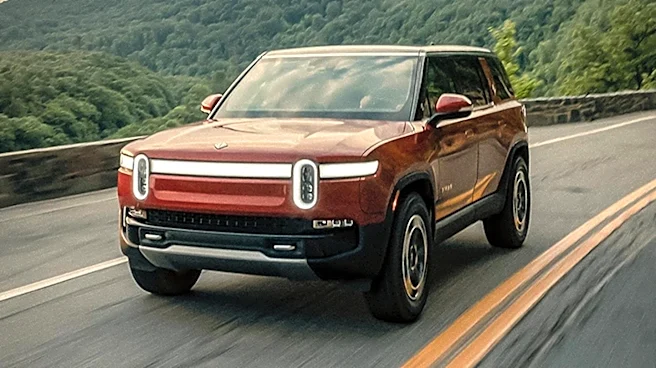
Rivian (NASDAQ:RIVN), the electric vehicle manufacturer known for its consumer EVs and commercial delivery vans for Amazon, announced robust second-quarter earnings. The company reported revenues of $1.66 billion, marking a significant 27.2% increase
year-over-year. This figure surpassed analysts' expectations by 7.9%. Rivian also achieved an impressive beat on analysts' EBITDA estimates and provided full-year EBITDA guidance that exceeded expectations. RJ Scaringe, Rivian Founder and CEO, highlighted the commencement of external deliveries for the R2 model, anticipating it to be a significant growth driver. The company also conducted over 57,000 demo drives, a new record, indicating strong consumer interest in its offerings, particularly the R2 as an attractively priced option in the EV market.
Why It's Important?
Rivian's strong Q2 performance is significant for the electric vehicle sector and the broader automotive industry. Exceeding revenue and EBITDA expectations demonstrates the company's growing market penetration and operational efficiency in a highly competitive landscape. The success of the R2 model's initial deliveries and the record number of demo drives suggest increasing consumer demand for Rivian's products, which could translate into sustained sales growth. This positive financial report may bolster investor confidence in Rivian's long-term viability and its ability to challenge established automakers as well as other EV startups. The company's performance also provides a positive signal for the future of electric commercial vehicles, given its role as a supplier for Amazon's delivery fleet.
What's Next?
Despite the strong earnings report, Rivian's stock experienced a decline of 11.9% since the announcement, currently trading at $14.82. This suggests that while the company outperformed analyst consensus, investor expectations might have been even higher. Moving forward, Rivian will need to continue demonstrating consistent growth and profitability to fully satisfy market expectations. The successful scaling of R2 production and deliveries will be crucial for its long-term growth and profitability goals. The company will also need to navigate the evolving competitive landscape in the EV market, which includes both traditional automakers transitioning to electric and other emerging EV manufacturers. Future earnings reports will be closely watched for continued positive trends in revenue, profitability, and delivery numbers.
Beyond the Headlines
Rivian's performance underscores the dynamic shifts occurring within the automotive industry, driven by the transition to electric vehicles. The company's focus on both consumer and commercial EV segments positions it uniquely to capitalize on different market demands. The emphasis on the R2 model as a 'game changer' suggests a strategic move towards more accessible pricing, which could broaden its customer base and accelerate EV adoption. However, the stock's post-earnings dip highlights the intense scrutiny and high expectations placed on EV companies, where even strong results may not always translate into immediate stock appreciation if they don't meet elevated investor sentiment. This indicates a maturing EV market where companies are increasingly judged not just on growth, but also on a clear path to sustainable profitability and market leadership.