


What's Happening?
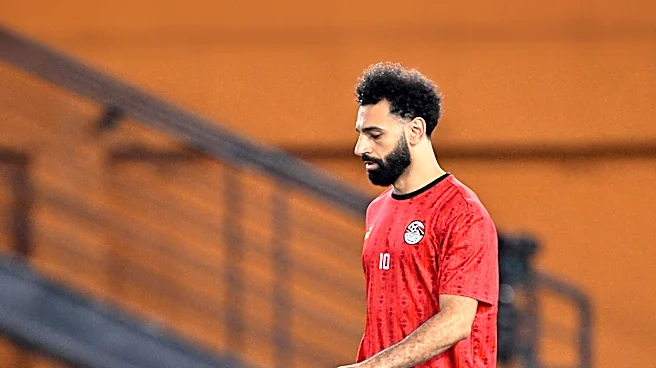
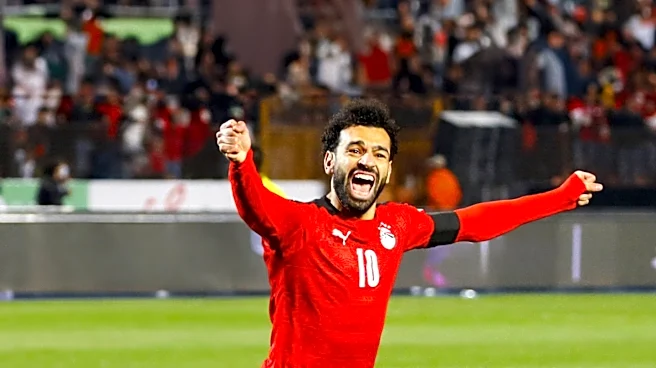
Trabzonspor president Ertuğrul Doğan, who also leads the Turkish Clubs Union Foundation, has discussed the profound impact of Mohamed Salah's transfer to Trabzonspor. Doğan stated during a live broadcast on 'TRT Spor' that Salah's arrival significantly
boosted tourism and the overall economy of Trabzon. He emphasized that the deal was more than just a technical addition to the team; it was a project for the entire city. According to Doğan, Salah's presence attracted global attention, leading to increased interest in Trabzon, its culture, and its tourism sector. The matches featuring Salah are now broadcast in 50 countries, contributing to the city's prosperity. Doğan also noted that people in England frequently inquire about how Trabzonspor managed to sign Salah, underscoring the player's international appeal and the positive attention he brought to the club and the city.
Why It's Important?
This development highlights the significant economic and cultural influence that high-profile athletes can have beyond the sports arena. For Trabzon, Salah's transfer has translated into tangible benefits, including a revitalization of its tourism sector and a boost to its local economy. This demonstrates how strategic acquisitions in sports can serve as powerful marketing tools for cities and regions, attracting international visitors and investment. The increased global broadcasting of matches further elevates the city's profile, potentially leading to long-term economic growth and cultural exchange. This situation also underscores the importance of marketing strategies in football, as Doğan argued that bringing global stars to the Super Lig can significantly lift the football economy and increase broadcasting revenues, benefiting not just individual clubs but the entire league and, by extension, the national economy.
What's Next?
Trabzonspor and other Turkish clubs are likely to continue pursuing high-profile international players, recognizing the broader economic and marketing benefits such transfers can bring. Doğan's call for cooperation among Turkish clubs to tackle economic problems suggests a potential shift towards more collaborative strategies in player acquisitions and league promotion. The success seen with Salah's transfer could encourage more clubs to view player signings as comprehensive projects aimed at boosting regional economies and international visibility. This approach could lead to increased investment in Turkish football, further enhancing its global standing and attracting more tourists and investors to cities like Trabzon. The continued broadcasting of matches in numerous countries will likely sustain the international interest generated by such star players.
Beyond the Headlines
The case of Mohamed Salah in Trabzon illustrates a growing trend where sports figures transcend their athletic roles to become significant cultural and economic ambassadors. This phenomenon has broader implications for how cities and nations can leverage sports to achieve economic development and enhance their global image. It also raises questions about the ethical considerations of such high-stakes transfers, particularly regarding the balance between economic gain and the integrity of the sport. Furthermore, the emphasis on communication and cooperation among clubs, as advocated by Doğan, suggests a potential paradigm shift in sports management, moving towards collective strategies for economic stability and growth within leagues. This could foster a more sustainable model for football economies, where the success of one club contributes to the prosperity of the entire league and its associated regions.