


What's Happening?
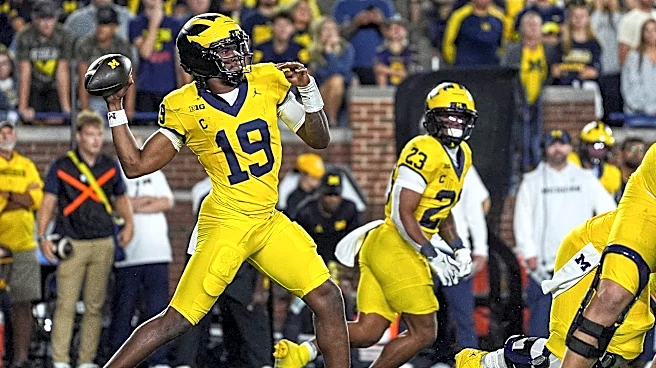
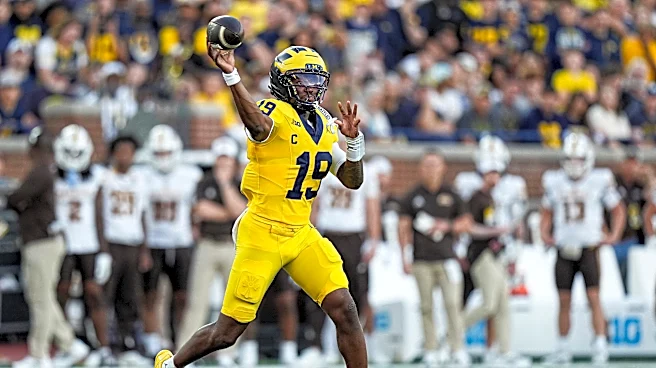
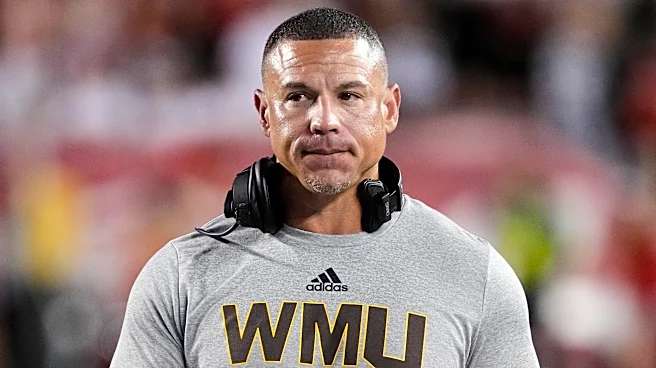
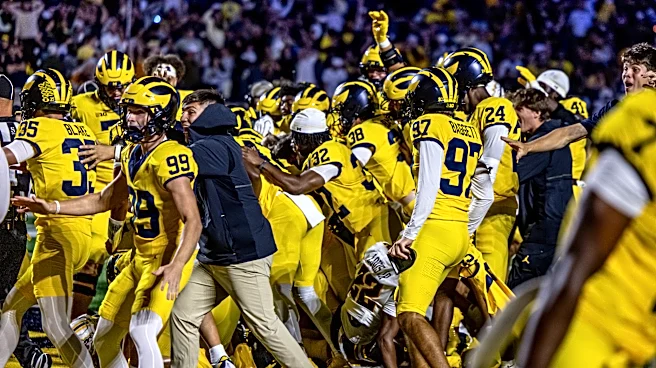
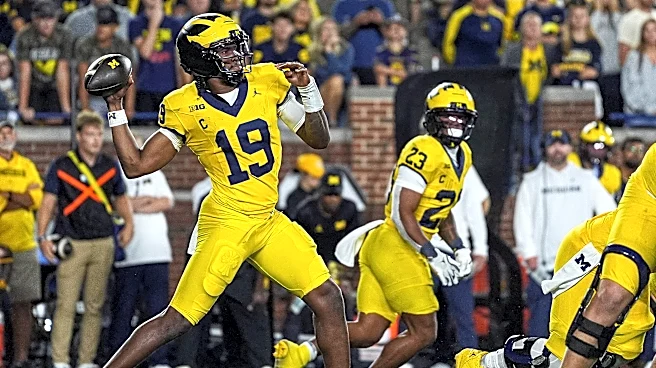
The Big Ten conference is under scrutiny following a controversial ending to the Michigan Wolverines' season opener against Western Michigan. With nine seconds left and Michigan trailing 12-7, quarterback Bryce Underwood threw an incomplete pass that
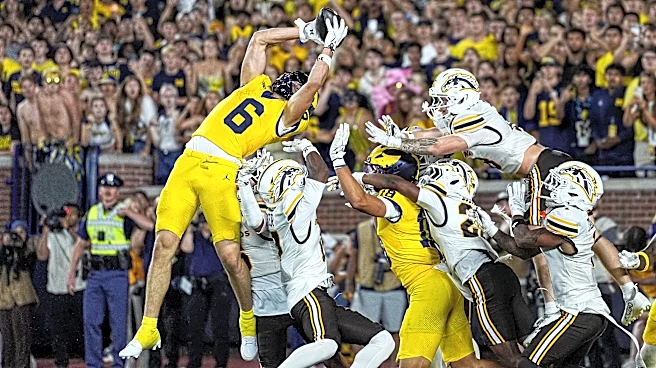
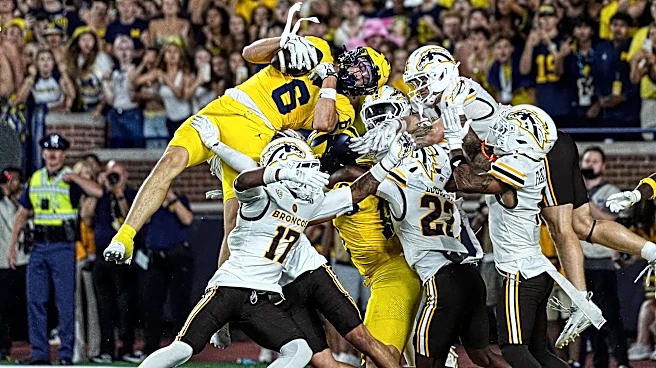
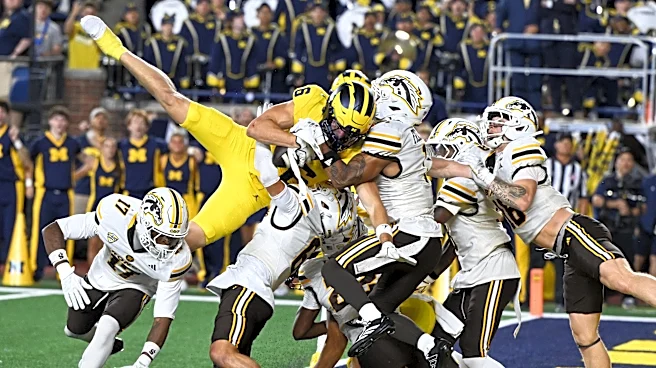
appeared to end the game as the clock on NBC's broadcast and in the stadium showed 0:00. However, Big Ten replay officials intervened, ruling that one second remained on the clock. This decision allowed Michigan another play from the WMU 47-yard line, resulting in a game-winning 47-yard touchdown pass to JJ Buchanan, securing a 13-12 victory for Michigan. The Big Ten released footage and audio from the review, indicating that a Western Michigan player touched the ball with one second left according to their replay clock. This discrepancy has led to questions about the accuracy of the broadcast and stadium clocks versus the official replay system.
Why It's Important?
This incident highlights significant issues regarding game officiating and the integrity of sports broadcasts, particularly in high-stakes college football. The controversy raises questions about the reliability of timing mechanisms used by both media partners and official review systems. For Western Michigan, the decision effectively robbed them of what would have been a historic victory, impacting team morale and potentially future recruitment. For Michigan, while they secured a win, the manner of victory casts a shadow over their performance, especially given their struggles against a MAC opponent. The situation also underscores the financial and emotional investments in college football, where a single call can have profound consequences for teams, conferences, and their media partners. The Big Ten's explanation, which implicitly suggests NBC's clock was faulty, could strain relationships with broadcasting partners and erode public trust in game outcomes.
What's Next?
The Big Ten has announced plans to join the ACC in sharing live replay room discussions, though initially only for a limited number of games. This incident may accelerate the adoption of such transparency measures across more games and potentially other conferences, as public demand for clarity in officiating decisions grows. The conference and its media partners will likely face continued pressure to address the discrepancies in clock synchronization and ensure consistent, accurate timing across all platforms. Further discussions and potential policy changes regarding replay review protocols and clock management are anticipated to prevent similar controversies in the future. The outcome of this game will undoubtedly be a talking point for the remainder of the season, influencing perceptions of both teams and the Big Ten's officiating standards.
Beyond the Headlines
The controversy extends beyond a simple officiating error, touching upon the broader implications of technology in sports and the public's perception of fairness. The incident exposes a potential vulnerability in the multi-billion dollar college football industry, where logistical errors by powerful entities can disproportionately affect smaller programs. It also raises ethical questions about accountability when such errors occur, especially when they benefit a major program at the expense of an underdog. The public's immediate distrust, despite official explanations, reflects a growing skepticism towards institutional authority in sports. This event could serve as a catalyst for a more comprehensive overhaul of how game timing and replay reviews are managed, pushing for greater transparency and technological integration to ensure that the on-field action is accurately reflected by all official and broadcast clocks.