








What's Happening?
Sierra Pacific Industries, a fourth-generation family-owned company based in Northern California, has grown to become one of the largest lumber and millwork producers in the United States. Established in 1949, the company currently employs approximately
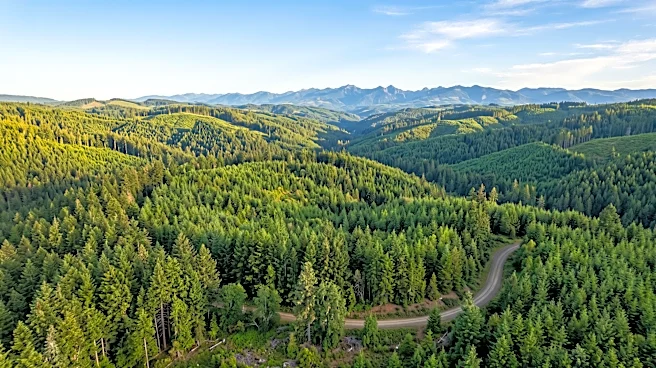
6,500 individuals. Sierra Pacific Industries highlights its commitment to its workforce by offering comprehensive benefits, including low-cost health benefits, a retirement plan with employer-paid contributions, paid vacation, and ten paid holidays. The company operates state-of-the-art facilities across various sectors such as manufacturing, custom wood-framed windows, fabrication, millwork, veneer, cogeneration, trucking, and forestry. Sierra Pacific Industries also emphasizes its role as an Equal Opportunity Employer, actively including individuals with disabilities and veterans in its workforce. The company's operations span California, Oregon, and Washington, where it sustainably manages over 2.4 million acres of timberland.
Why It's Important?
The operations and employment practices of Sierra Pacific Industries are significant for several reasons. As one of the largest lumber and millwork producers, the company plays a crucial role in the U.S. construction and housing markets, supplying essential materials. Its substantial workforce of around 6,500 employees contributes significantly to regional economies, particularly in Northern California and other areas where its facilities are located. The provision of excellent benefits, such as low-cost health insurance and employer-paid retirement contributions, sets a standard for employee welfare within the manufacturing and forestry sectors, potentially influencing labor practices across the industry. Furthermore, Sierra Pacific's commitment to sustainable forest management, including a 100-year plan and planting over 6 million new trees annually, underscores the growing importance of environmental stewardship in large-scale industrial operations. This approach helps ensure the long-term viability of timber resources and supports ecological balance, addressing concerns about deforestation and climate change.
What's Next?
Sierra Pacific Industries is expected to continue its focus on sustainable forest management, with ongoing efforts to plant millions of new trees annually and adhere to its 100-year management plan for its timberlands. The company's emphasis on utilizing nearly 100% of every piece of wood, including converting waste into electricity through its eight biomass-fueled power plants, suggests a continued push towards operational efficiency and environmental responsibility. Future developments may include further advancements in its state-of-the-art facilities across its diverse operations, from manufacturing to cogeneration. As an Equal Opportunity Employer, Sierra Pacific will likely maintain its inclusive hiring practices, potentially expanding its workforce as demand for lumber and millwork evolves. The company's commitment to employee benefits could also serve as a model, influencing other large employers in the U.S. to enhance their own compensation and benefits packages.
Beyond the Headlines
Beyond its immediate economic impact, Sierra Pacific Industries' practices highlight broader trends in U.S. industry concerning sustainability and corporate responsibility. The company's extensive land ownership and long-term forest management plan demonstrate a private sector approach to environmental conservation that complements public efforts. Its ability to effectively use almost all wood material, including generating electricity from waste, showcases a circular economy model within a traditional industry, reducing waste and reliance on fossil fuels. This integrated approach to resource management and energy production could serve as a blueprint for other resource-intensive industries seeking to minimize their environmental footprint. The company's strong employee benefits package also reflects a growing recognition among large corporations of the importance of worker well-being and retention, potentially influencing labor market dynamics and corporate social responsibility standards across the nation.