



What's Happening?
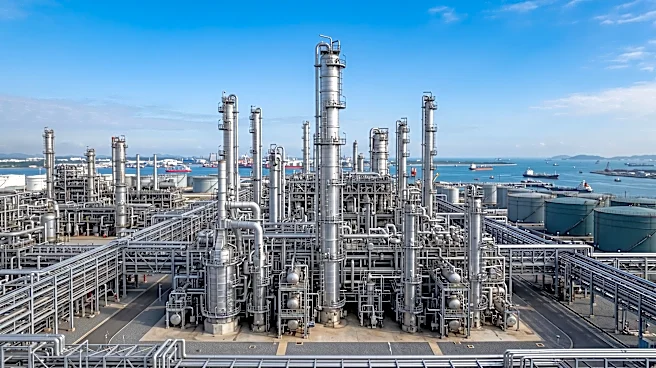
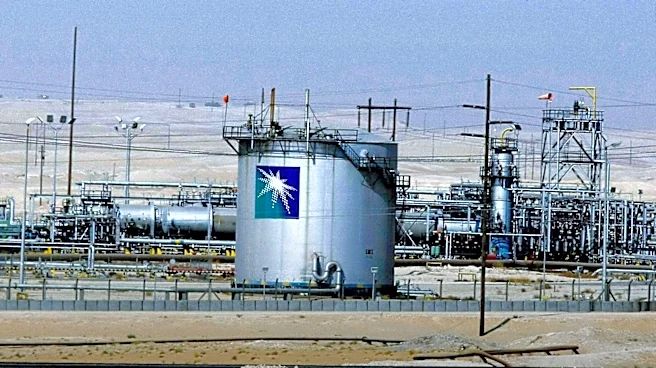
Saudi Aramco, in conjunction with its South Korean subsidiary S-OIL, has officially opened the $7 billion Shaheen petrochemical complex in Ulsan, South Korea. This project represents Saudi Aramco's largest investment in the country and is set to significantly
boost petrochemical production. The complex will add 3.2 million tonnes of annual petrochemical capacity, with commercial operations slated to commence in 2027. Saudi Aramco holds over 63% of S-OIL. The Shaheen complex is notable for being the first large-scale commercial application of Aramco’s thermal crude-to-chemicals technology, developed with Lummus Technology. This advanced process enhances the conversion of crude oil into higher-value industrial chemicals, which are crucial for various Asian manufacturing sectors, including electric vehicles and semiconductors. The facility includes what Aramco describes as the world’s largest single-unit steam cracker, capable of producing 1.8 million tonnes of ethylene annually. This expansion is projected to increase petrochemicals' contribution to S-OIL's business portfolio from 12% to 25%. The inauguration occurred amidst renewed attacks on Saudi energy infrastructure, underscoring the strategic importance of geographical and industrial diversification for the Saudi energy giant.
Why It's Important?
This significant investment by Saudi Aramco in South Korea highlights a strategic pivot towards industrial diversification and capturing greater value from crude oil beyond traditional refining. By expanding its petrochemical footprint in Asia, Aramco aims to secure long-term demand in a region with robust manufacturing industries. The deployment of its proprietary thermal crude-to-chemicals technology could set a new standard in the industry, offering higher efficiency and greater yields of valuable chemicals. This move also helps Saudi Aramco mitigate risks associated with geopolitical instability in the Middle East, as attacks on its domestic infrastructure continue to pose threats to global oil supplies. For South Korea, the complex represents a substantial foreign investment, bringing advanced technology and boosting its industrial capacity. However, the project faces challenges from global oversupply in ethylene and intense competition from China, which could impact its profitability. The success of Shaheen will depend on its technological efficiencies and economies of scale to overcome persistent pressure on petrochemical margins.
What's Next?
Commercial operations for the Shaheen petrochemical complex are scheduled to begin in 2027. The coming years will be critical for assessing the project's profitability and its ability to navigate the competitive global petrochemical market, particularly given the existing oversupply of ethylene and strong competition from Chinese producers. Saudi Aramco will likely continue to monitor geopolitical developments in the Middle East, as ongoing threats to its energy infrastructure could further emphasize the importance of its international diversification strategy. The company's long-term strategy involves further capturing industrial value from every barrel of oil, suggesting more investments in downstream and chemical projects globally. The performance of this complex will also serve as a benchmark for future applications of Aramco's thermal crude-to-chemicals technology, potentially influencing further technological advancements and investments in the sector.
Beyond the Headlines
The inauguration of the Shaheen complex reflects a broader strategic shift among major oil producers to adapt to evolving global energy demands and geopolitical landscapes. By investing heavily in petrochemicals, Saudi Aramco is positioning itself for a future where the demand for crude oil as a direct fuel source may plateau, while the demand for its derivatives in manufacturing continues to grow. This strategy also underscores the increasing integration of energy and industrial sectors, as petrochemical products are vital for advanced manufacturing, including electric vehicles and semiconductors. The technological innovation demonstrated by Aramco’s thermal crude-to-chemicals process could drive further research and development in the industry, pushing for more efficient and value-added utilization of crude oil. Furthermore, such large-scale international investments by state-owned enterprises like Saudi Aramco highlight the complex interplay between national economic interests, global energy security, and regional geopolitical stability, as companies seek to de-risk their operations through geographical and industrial diversification.