




What's Happening?
Washington Governor Bob Ferguson has signed an executive order establishing the Washington State Space Council. This new statewide body is tasked with strengthening Washington's position in the rapidly expanding commercial space economy. The council's
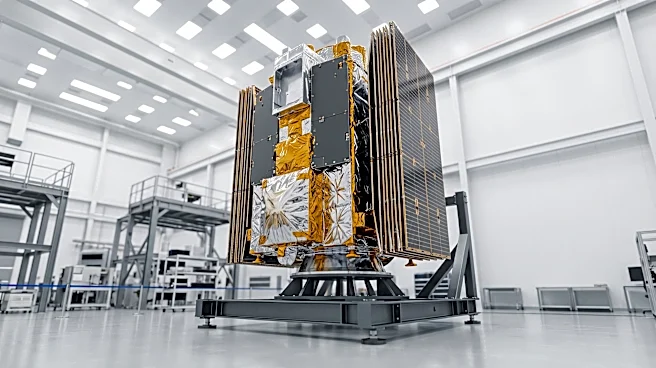
formation was announced at Space Northwest’s Seattle Space Week kickoff event. Preliminary research commissioned by Space Northwest indicates that Washington's space sector currently supports approximately 12,340 direct jobs, generates $8.1 billion in economic output, and contributes $2.3 billion in labor income. When indirect and induced impacts are included, these figures rise to 34,200 jobs, $12.4 billion in statewide economic output, and $3.9 billion in labor income. A significant finding highlights that over 68% of all active satellites currently in Earth orbit were manufactured in Washington, more than double the rest of the world combined. The 23-member public-private council comprises leaders from commercial space companies, aerospace and advanced manufacturing, labor, higher education, local government, and the Legislature. The Washington State Department of Commerce will provide staffing and logistical support.
Why It's Important?
The establishment of the Washington State Space Council is a strategic move to solidify and expand Washington's already prominent role in the global commercial space industry. This initiative is crucial for the state's economic future, aiming to attract further investment, create high-quality jobs, and maintain its leadership in advanced manufacturing and technological innovation. The space sector's substantial economic contributions, including significant job creation and output, underscore its importance to the state's overall prosperity. By focusing on infrastructure, workforce development, policy environment, and investment strategy, the council seeks to ensure sustained growth. This proactive approach will help Washington remain competitive in a rapidly evolving global market, potentially influencing national trends in space technology and manufacturing. The council's efforts could also serve as a model for other states looking to capitalize on emerging high-tech industries.
What's Next?
The newly formed Washington State Space Council will provide findings and recommendations to Governor Ferguson through advisory reports. These reports will focus on identifying investments, policies, and partnerships necessary to support continued industry growth and economic opportunity. The council will also explore avenues for developing Washington-based commercial launch capabilities. Its ongoing work will involve assessing the state's current capabilities and proposing strategies to enhance global competitiveness, strengthen the advanced manufacturing base, and attract further investment. The recommendations from the council are expected to guide future state legislation and executive actions aimed at fostering the space economy. The success of these initiatives will depend on the effective collaboration between public and private sector stakeholders, as well as the state's ability to implement the council's strategic advice.
Beyond the Headlines
Beyond the immediate economic benefits, the creation of the Washington State Space Council signifies a deeper commitment to fostering a culture of innovation and technological leadership. This initiative could lead to significant advancements in related fields such as materials science, artificial intelligence, and robotics, as the demands of the space industry often drive cross-sector innovation. The focus on developing local launch capabilities could also reduce reliance on other regions, enhancing national security and economic resilience. Furthermore, the council's emphasis on higher education and workforce development suggests a long-term vision for cultivating a skilled talent pipeline, ensuring that Washington remains at the forefront of scientific and engineering progress. This strategic investment in the space sector reflects a broader understanding of its potential to shape future technological landscapes and create enduring societal benefits.