






What's Happening?
Ravi Kumar S, CEO of Cognizant, highlights that reskilling must become an integral part of the talent infrastructure, rather than a periodic intervention, as artificial intelligence (AI) reshapes jobs across all levels of the workforce. Speaking with
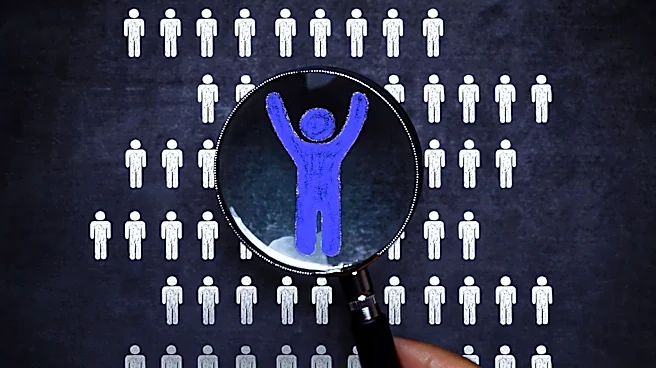
Saadia Zahidi of the World Economic Forum, Kumar S stated that 93% of jobs are being impacted by AI. He advocates for companies to invest in reskilling with the same strategic importance as they do for compute or large language model access. Kumar S predicts a shift in the job 'pyramid,' where middle-layer roles focused on coordination and orchestration will diminish, giving way to more 'player-coach' roles. He also emphasizes the opportunity to redistribute value downwards, leading to higher wages for frontline workers. For higher education, this necessitates a transformation across three interconnected layers: campus, student, and hiring/placement practices, to align with evolving industry demands and prepare graduates for continuously evolving careers.
Why It's Important?
This perspective is crucial for the U.S. economy and its workforce as it underscores the fundamental shift required in how businesses and educational institutions approach talent development in the age of AI. By integrating reskilling into the core talent infrastructure, companies can ensure their workforce remains adaptable and competitive, mitigating potential job displacement and fostering continuous innovation. The predicted change in the job 'pyramid' suggests a restructuring of organizational hierarchies, potentially leading to more empowered and skilled frontline workers. This could have significant implications for wage distribution and economic equity. For higher education, adapting to these changes is vital to ensure graduates are equipped with relevant skills, making them employable and capable of navigating dynamic career paths, thereby strengthening the overall U.S. talent pipeline.
What's Next?
Companies are expected to increase their investment in reskilling programs, treating them as essential infrastructure rather than optional benefits. This will likely involve developing comprehensive internal training initiatives and partnering with educational institutions. Higher education institutions will need to transform their curricula and career services to become more 'career-intelligent' and responsive to industry demands, focusing on continuous learning and competency-led talent discovery. The shift towards 'player-coach' roles will require new leadership development programs. Additionally, there will be ongoing discussions and efforts to ensure the benefits of AI-driven productivity are shared more broadly, potentially leading to policy considerations around wage structures and worker support in the evolving labor market.
Beyond the Headlines
Kumar S's vision extends beyond mere skill acquisition, suggesting a profound re-evaluation of the social contract between employers, employees, and educational systems. The idea of 'drifting value downwards' to increase frontline worker wages implies a potential for AI to not only boost productivity but also to address long-standing issues of income inequality. This could lead to a more equitable distribution of economic gains from technological advancement. Furthermore, the call for 'campus transformation' and 'student transformation' highlights the need for a paradigm shift in education, moving from a model of static knowledge acquisition to one of continuous learning and adaptability. This long-term cultural and systemic change will be critical for the U.S. to fully harness the potential of AI while ensuring a resilient and prosperous society.