





What's Happening?
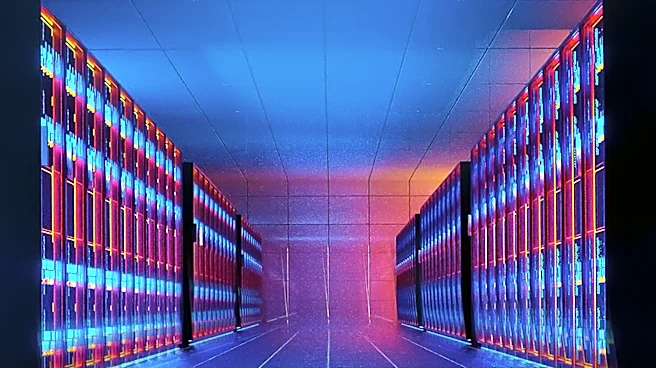
Stoel Rives LLP represented STN One Inc. in a significant $780 million partnership with ChronoScale Holdings Corporation. This collaboration aims to develop a large-scale AI data center campus in Odessa, Texas. The initial phase of the project is designed
to provide 65 MW of capacity, specifically to serve a leading frontier AI lab under contract with STN. The overall plan for the campus is ambitious, with an expected expansion to up to 350 MW across three phases. This development will integrate on-site power generation, battery storage solutions, and STN’s proprietary Elemental Data Centers. The project is also projected to create 200 permanent jobs and includes plans for workforce training opportunities in partnership with Odessa College and the University of Texas Permian Basin.
Why It's Important?
This $780 million AI data center partnership is a significant development for the U.S. technology and energy sectors, particularly in Texas. The substantial investment underscores the escalating demand for robust infrastructure to support advanced artificial intelligence applications. For the U.S. economy, this project represents a considerable boost in high-tech job creation and regional economic development in Odessa. The integration of on-site power generation and battery storage highlights a growing trend towards energy independence and sustainability within large-scale data operations, which could set a precedent for future data center developments. Furthermore, the collaboration with local educational institutions for workforce training addresses the critical need for skilled labor in the rapidly expanding AI and data management fields, ensuring a pipeline of talent for the industry.
What's Next?
The immediate next steps involve the commencement of the initial development phase to establish the 65 MW capacity for the frontier AI lab. Following this, STN One and ChronoScale Holdings Corporation will proceed with the subsequent phases to expand the campus to its full 350 MW potential. The partnerships with Odessa College and the University of Texas Permian Basin will likely move forward with the development and implementation of specific workforce training programs to prepare local residents for the 200 permanent jobs expected to be created. This project's progress will be closely watched by other companies in the AI and data center industries, potentially influencing future investment decisions and development strategies across the U.S.
Beyond the Headlines
The establishment of such a large-scale AI data center in Odessa, Texas, has broader implications beyond its immediate economic impact. It signifies the increasing decentralization of major tech infrastructure, moving beyond traditional tech hubs to regions with available land, energy resources, and a willing workforce. This trend could lead to the revitalization of various regional economies across the U.S. by attracting high-tech industries and associated services. Ethically, the sheer power consumption of AI data centers raises questions about energy sustainability and environmental impact, making the inclusion of on-site power generation and battery storage a critical component. This project could serve as a model for how future energy-intensive AI developments can attempt to mitigate their environmental footprint, influencing policy and industry standards for sustainable technology infrastructure.