




What's Happening?
Vertiv, a U.S.-listed company and a key supplier to Airtel Africa’s 42MW Nigerian data center, has announced an agreement to acquire North Carolina-based UtilityInnovation Group (UIG). The acquisition is valued at up to $2.6 billion, comprising an initial
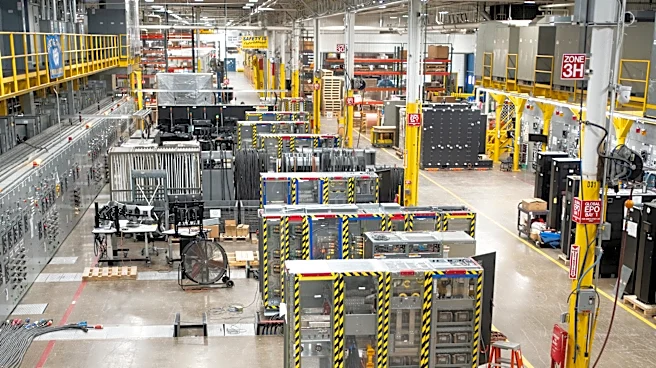
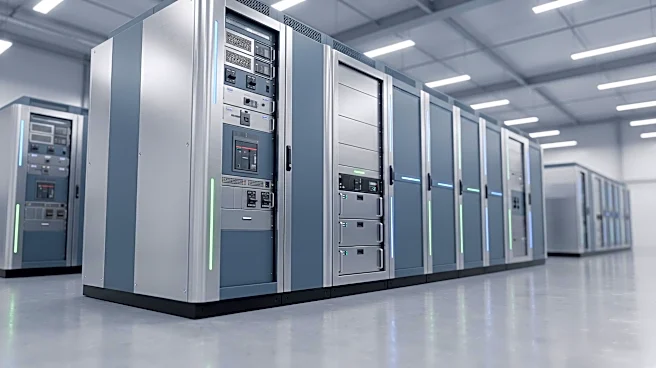
cash payment of $1.45 billion and potential additional payments of $1.15 billion contingent on UIG meeting specific earnings targets over the subsequent 12 and 24 months. UIG specializes in developing microgrid controls, specialist switchgear, and systems that coordinate electricity from public grids, on-site generators, and energy storage. This technology is crucial for enabling electricity-intensive artificial intelligence (AI) facilities to operate efficiently, even in locations where conventional power grids cannot immediately provide their full power requirements. The transaction is anticipated to conclude in the fourth quarter of 2026, pending regulatory approvals. Vertiv expects this acquisition to positively impact its adjusted earnings per share in the first full year post-completion.
Why It's Important?
This acquisition is significant for the U.S. technology and energy sectors, particularly in addressing the escalating power demands of the AI industry. As AI data centers, with their clusters of high-performance computer chips, require substantial electricity and cooling, the ability to operate beyond the limitations of traditional power grids becomes critical. UIG's technology offers a solution by allowing data centers to integrate various power sources, ensuring continuous supply and preventing disruptions to cloud services, digital payments, and communication platforms. This move positions Vertiv to expand its offerings beyond internal data center equipment to comprehensive infrastructure connecting facilities to both grids and independent power sources. The deal underscores the growing importance of robust and flexible power solutions for the burgeoning AI sector, which is a key driver of economic growth and technological advancement in the U.S. and globally. The investment reflects a strategic response to the power bottleneck faced by the AI industry, aiming to facilitate the expansion of AI infrastructure.
What's Next?
The acquisition is slated to close in the fourth quarter of 2026, subject to regulatory approvals. Following the closure, Vertiv will integrate UIG's microgrid control and power coordination technologies into its existing portfolio, aiming to offer more comprehensive solutions for data center power management. This integration is expected to enhance Vertiv's competitive edge in the rapidly expanding market for AI infrastructure. While Vertiv is a supplier to Airtel Africa's data center projects, neither company has confirmed if UIG's acquired technology will be specifically deployed in these African facilities. However, UIG's systems could be highly relevant for data centers in regions with unreliable public electricity, such as parts of Africa, where combining various power sources is essential. The success of this integration and the broader adoption of UIG's technology will be closely watched as the AI industry continues to grapple with its energy demands.
Beyond the Headlines
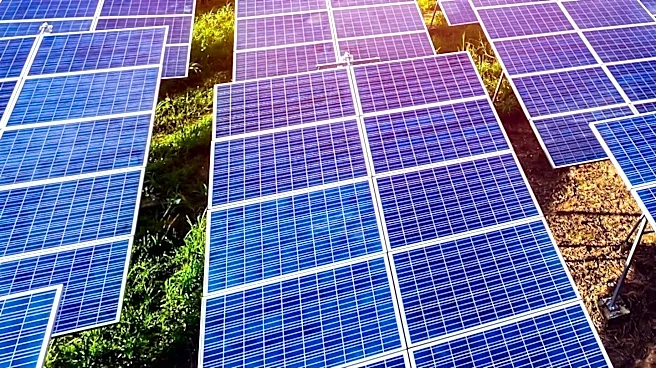
The acquisition highlights a deeper trend in the technology sector: the increasing convergence of energy infrastructure and advanced computing. As AI applications become more sophisticated and pervasive, the energy footprint of data centers is growing exponentially, pushing the limits of existing power grids. This development raises critical questions about energy sustainability, grid resilience, and the environmental impact of AI. The ability to seamlessly integrate diverse power sources, including renewables and on-site generation, will be crucial for the long-term viability and ethical development of AI. Furthermore, this acquisition could spur further innovation in energy management solutions for data centers, potentially leading to more decentralized and resilient power architectures. It also underscores the strategic importance of companies that can provide end-to-end solutions for the complex power needs of modern digital infrastructure, influencing future investment and policy decisions related to energy and technology.