




What's Happening?
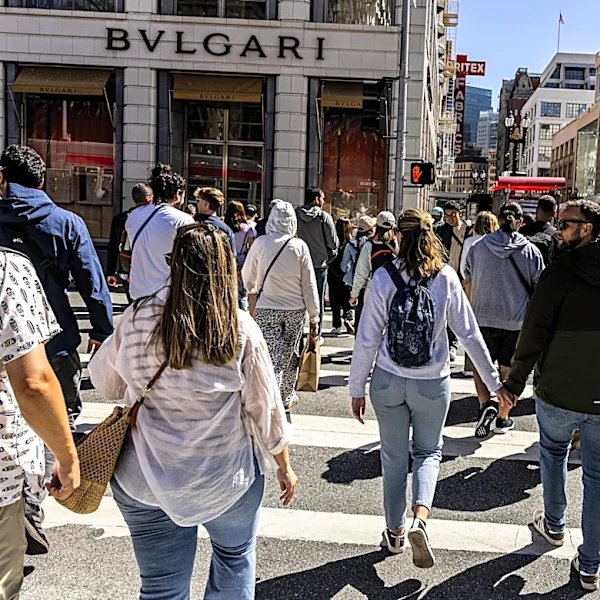
Chris Geidner, a user on the social media platform Bluesky, recently voiced a common frustration regarding pedestrian behavior. Geidner highlighted a pet peeve concerning groups of people who occupy sidewalks without making space for others to pass in both
directions. This behavior, described as acting as if on a one-way sidewalk, is seen by Geidner as an 'abdication of the social contract.' The post, made on November 15, 2026, reflects a sentiment about basic public courtesy and shared spaces. Geidner's comment suggests that while seemingly a minor issue, it evokes a strong, perhaps 'irrational,' feeling of disregard for communal norms among pedestrians.
Why It's Important?
This seemingly minor observation by Chris Geidner touches upon broader societal implications concerning public etiquette and the unwritten rules governing shared urban spaces. The 'social contract' in this context refers to the implicit agreements people make to cooperate for social benefits. When these unwritten rules, such as yielding on a sidewalk, are disregarded, it can lead to minor but frequent friction in daily interactions. This can contribute to a general sense of incivility or frustration in densely populated areas. For urban planners and community leaders, understanding these everyday annoyances can be crucial in designing public spaces that encourage harmonious coexistence and efficient pedestrian flow, ultimately impacting the quality of urban life and public sentiment.
What's Next?
While Chris Geidner's post is a personal observation, it could spark further discussion on social media platforms about pedestrian etiquette and urban living. Such discussions might lead to increased awareness among individuals about their impact on shared spaces. In a broader sense, if similar sentiments gain traction, it could potentially influence local community initiatives or public awareness campaigns aimed at promoting better pedestrian behavior. However, without a more organized movement or official intervention, the immediate impact is likely to remain at the level of individual reflection and online discourse regarding public courtesy in urban environments.
Beyond the Headlines
Geidner's comment, though focused on a specific pedestrian issue, subtly highlights the erosion of minor social courtesies in modern society. This 'abdication of the social contract' can be seen as a micro-level indicator of larger trends where individual convenience sometimes overrides collective consideration. The increasing density of urban environments, coupled with distractions from technology, may contribute to a reduced awareness of one's surroundings and impact on others. This phenomenon raises questions about how societies maintain civility and order in public spaces without formal enforcement, relying instead on shared understanding and mutual respect. The challenge lies in fostering a culture where these unwritten rules are instinctively followed, ensuring smoother and more pleasant daily interactions for everyone.