







What's Happening?
A recent survey conducted by Logistics Management has revealed significant insights into the 2026 Peak Season for supply chain and logistics stakeholders. The survey highlights that the ongoing impact of tariffs and trade-related uncertainties continues
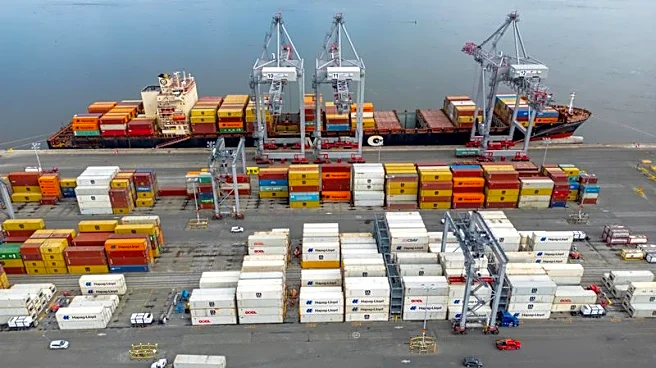
to shape the logistics landscape. The expiration of the White House's temporary 10% Section 122 tariffs, which were deemed illegal by the Supreme Court under the International Economic Emergency Act, has led to increased front-loading of cargo. This has resulted in a record-breaking June for the Port of Los Angeles, with a 12% annual increase in volume. The survey indicates that 52% of respondents expect a more active Peak Season in 2026, driven by factors such as customer delivery commitments, tight capacity, and geopolitical issues. Conversely, some respondents anticipate a less active season due to high tariffs and fuel costs.
Why It's Important?
The findings of the survey underscore the critical role of tariffs and trade policies in shaping logistics operations. The anticipation of higher tariffs has prompted companies to adjust their shipping strategies, leading to increased import demand and altered shipping patterns. This shift has significant implications for supply chain management, as companies must navigate evolving trade policies, rising fuel costs, and global uncertainties. The survey's results also highlight the importance of strategic planning and risk management in the logistics sector, as stakeholders seek to balance demand with operational constraints. The impact of these factors on day-to-day operations is evident, with 78% of respondents acknowledging the significance of Peak Season on their activities.
What's Next?
As the logistics industry braces for the 2026 Peak Season, stakeholders are likely to continue adapting their strategies to mitigate risks associated with tariffs and trade uncertainties. The Global Port Tracker report suggests that second-half volumes may trend down, as retailers prepare for potential tariff increases and other trade challenges. The ongoing back-to-school and holiday seasons will further influence shipping patterns, as companies strive to meet consumer demand while managing costs. The logistics sector will need to remain agile and responsive to changing conditions, leveraging past experiences to navigate the complexities of the current environment.