


What's Happening?
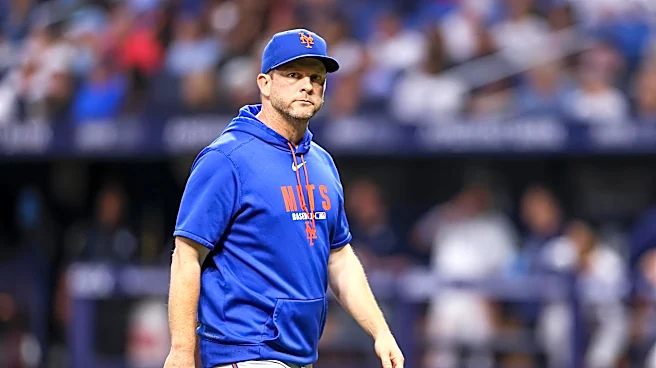
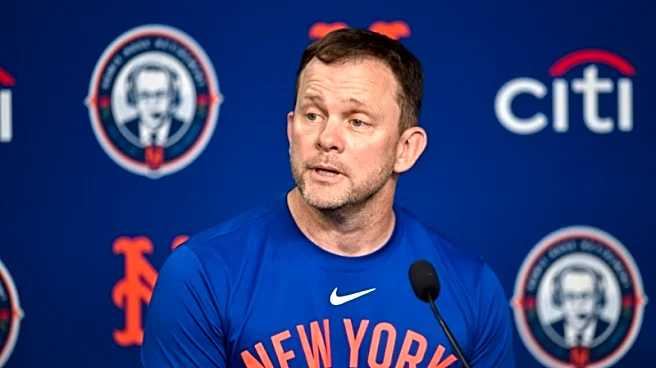
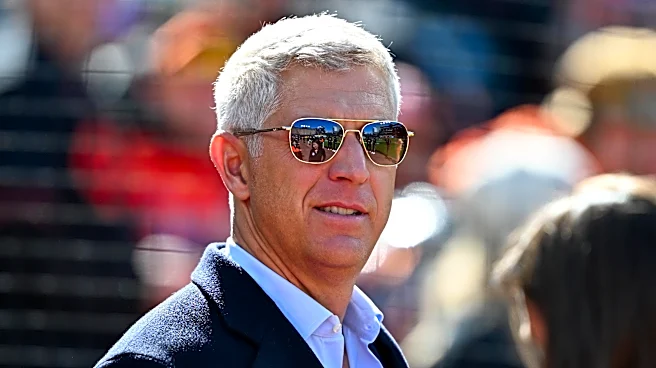
Derek Falvey, formerly the president of baseball operations for the Minnesota Twins, has mutually agreed to part ways with the organization and is set to join the New York Mets' front office in a key role. This move reunites Falvey with David Stearns,
the Mets' president of baseball operations, as they previously worked together in the Cleveland Guardians' front office. Falvey's departure from the Twins follows a change in the Pohlad family ownership structure, where Jim Pohlad succeeded his younger brother Joe as the controlling owner. This change reportedly led to differing ideas between Tom Pohlad and Falvey regarding the team's future direction. Under Falvey's leadership, the Twins made the postseason four times since he took over after the 2016 season, including winning their first postseason series in 21 years in 2023. His exit comes after the Twins had a significant sell-off at last year's trade deadline, signaling a rebuilding season.
Why It's Important?
This development signifies a notable shift in the leadership of two prominent Major League Baseball franchises. For the Minnesota Twins, the departure of Derek Falvey, who oversaw a period of postseason appearances and a significant playoff win, marks the end of an era influenced by a change in ownership. The differing visions between the new controlling owner, Jim Pohlad, and Falvey highlight the impact that ownership transitions can have on a team's strategic direction and personnel. For the New York Mets, acquiring Falvey is a strategic move to bolster their front office under David Stearns. Falvey's experience in building competitive teams, as evidenced by the Twins' postseason runs, could be instrumental in shaping the Mets' future roster and organizational philosophy. This move could lead to significant changes in player acquisition, development, and overall team strategy for both clubs, potentially impacting their competitive standing in the league.
What's Next?
Derek Falvey is expected to assume a significant, though yet-to-be-specified, role within the New York Mets' front office under David Stearns. His immediate focus will likely be on integrating into the Mets' existing structure and contributing to their strategic planning for upcoming seasons. For the Minnesota Twins, the departure of their president of baseball operations necessitates finding a replacement who aligns with the vision of the new controlling owner, Jim Pohlad. This search could lead to a new direction for the team, potentially impacting their approach to player development, trades, and free agency. Both organizations will be closely watched to see how these leadership changes translate into on-field performance and long-term success. The Mets will aim to leverage Falvey's expertise to enhance their competitive edge, while the Twins will seek to establish a new leadership structure to guide their rebuilding efforts.
Beyond the Headlines
The shift in leadership within the Minnesota Twins, driven by a change in the Pohlad family ownership, underscores the profound influence that ownership philosophies can have on professional sports organizations. The 'mutually agreed' parting of ways between Falvey and the Twins, stemming from differing ideas on how to proceed, illustrates the delicate balance between front office autonomy and ownership vision. This situation highlights a broader trend in sports where new ownership often seeks to implement its own strategic direction, sometimes leading to significant personnel changes. For the Mets, bringing in Falvey, who has a proven track record, suggests a commitment to building a robust and experienced front office. This move could set a precedent for how teams approach talent acquisition in their executive ranks, emphasizing the value of established relationships and shared professional histories in shaping a team's future.