



What's Happening?
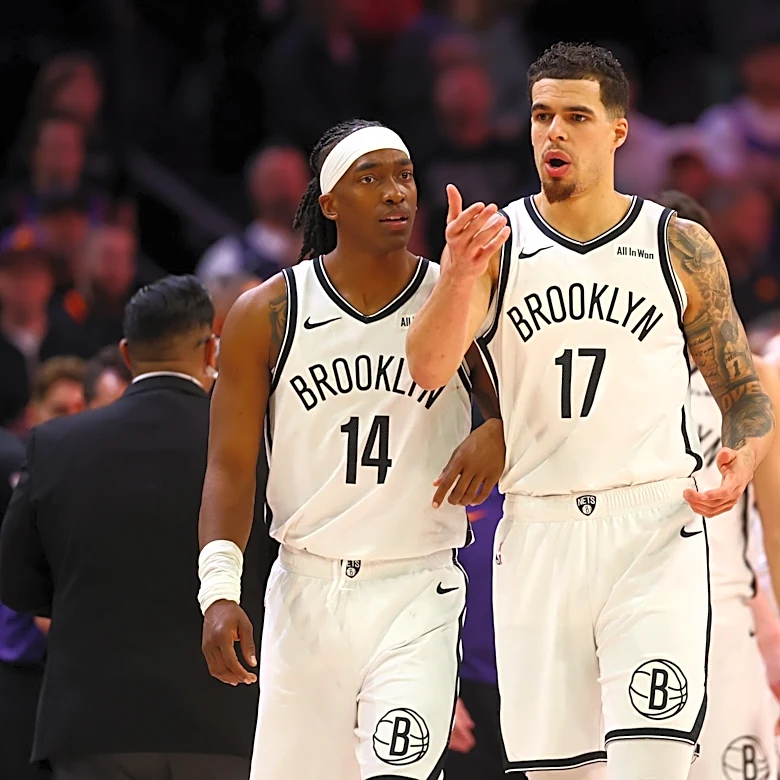
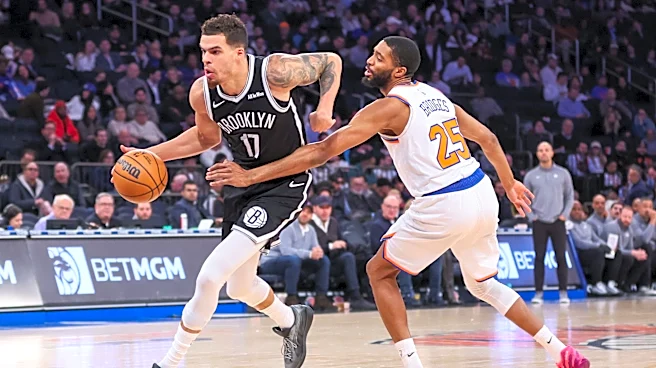
The New York Knicks are exploring a hypothetical trade scenario involving Pacôme Dadiet to free up salary cap space. This move would allow them to sign two veteran players, Bruce Brown and Drew Eubanks, while maintaining flexibility below the NBA’s second
apron. Currently, the Knicks have 13 standard contracts and approximately $3.3 million below the $221.7 million second apron, which is enough for only one veteran minimum contract. The proposed trade would send Dadiet, a future second-round pick, and approximately $2 million in cash considerations to the Brooklyn Nets in exchange for Brooklyn’s protected 2033 second-round pick. This transaction would clear about $4.8 million from the Knicks' payroll, increasing their space below the second apron to roughly $8.1 million. This additional space would enable them to sign both Brown and Eubanks, each with an apron charge of approximately $2.45 million on a veteran-minimum contract.
Why It's Important?
This potential trade is significant for the New York Knicks as it directly impacts their roster construction and competitive strategy for the upcoming season. By acquiring Bruce Brown, the team would gain a versatile perimeter defender and secondary ball-handler, addressing key needs. Drew Eubanks would provide crucial frontcourt insurance, especially after the departures of Mitchell Robinson and Ariel Hukporti. This strategic move aims to balance playoff experience, ball-handling, and frontcourt depth, which are vital for a team with championship aspirations. The ability to sign two veterans instead of one would significantly enhance the team's immediate competitiveness and provide more options for coach Mike Brown. Furthermore, preserving an open roster spot for the trade deadline or buyout market offers future flexibility to address unforeseen needs or capitalize on available talent, demonstrating a proactive approach to roster management.
What's Next?
If the hypothetical trade is executed, the New York Knicks would proceed with signing Bruce Brown and Drew Eubanks. This would bring their standard roster count to 14, leaving one position open for future acquisitions, potentially at the trade deadline or through the post-deadline buyout market. The team would then evaluate the performance of other players competing for roster spots, such as Ochai Agbaji, John Konchar, and James Wiseman, during training camp. Agbaji, in particular, is seen as a strong competitor for Brown if the Knicks prioritize youth, shooting, and wing defense. The Nets, in turn, would absorb Dadiet's contract, providing them with a low-risk opportunity to develop a former first-round pick who has struggled to find consistent minutes in a veteran-heavy rotation. This move would allow Brooklyn to assess Dadiet's potential to translate his G League scoring and size to the NBA level.
Beyond the Headlines
This potential trade highlights the intricate financial and strategic considerations that NBA teams navigate under the league's salary cap and apron rules. The Knicks' willingness to trade a developmental prospect like Dadiet for immediate veteran contributions underscores a 'championship timeline' mentality, prioritizing experienced players who can contribute immediately over long-term development projects. This approach reflects the high stakes and competitive pressure in the league, where every roster spot and dollar of cap space is meticulously managed. The trade also illustrates the symbiotic relationship between rival teams, as the Nets would benefit from a low-risk developmental opportunity while helping the Knicks manage their financial constraints. This kind of strategic maneuvering, often involving draft picks and cash considerations, is a common but often overlooked aspect of team building in professional sports, showcasing how teams optimize their resources to achieve both short-term success and long-term stability.