



What's Happening?
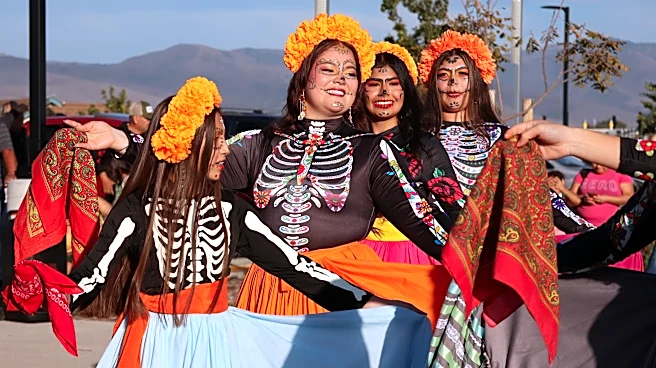
Mexico is currently immersed in its annual Day of the Dead celebrations, a tradition deeply rooted in pre-Hispanic agricultural beliefs and later influenced by Catholic traditions after the Spanish conquest in 1521. Festivities, which began in October
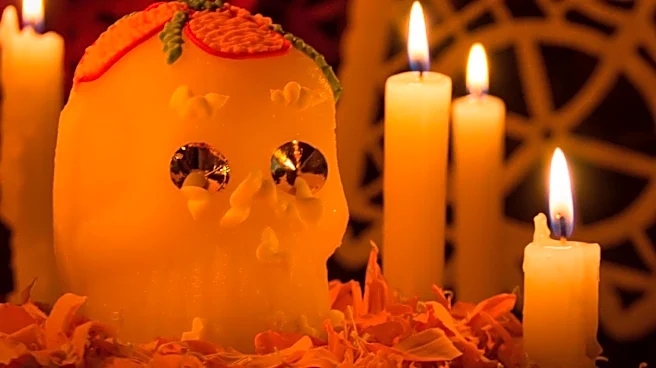
and culminate on November 1 and 2, involve vibrant parades in Mexico City, streets adorned with orange Mexican marigold flowers (cempasuchil), and bakeries selling traditional pan de muerto. Families create altars in their homes with offerings for deceased loved ones and gather in cemeteries on the night of November 1 to reconnect with their ancestors. However, the increasing international spotlight on these celebrations, particularly in regions like Oaxaca and Michoacan, has led to tensions due to overtourism. In Mexico City, some locals are skeptical of the annual parade, which was originally created for the 2015 James Bond film 'Spectre' and later incorporated into the city's festivities. In Janitzio, Michoacan, authorities closed the pantheon to tourists for the first time this year after reports of damaged tombs and cemetery walls due to overcrowding, allowing only local families and friends to enter.
Why It's Important?
The challenges posed by overtourism during Mexico's Day of the Dead celebrations highlight a growing global issue where cultural heritage sites and traditional events struggle to balance authenticity with increasing visitor numbers. For Mexico, this influx of tourists, while potentially boosting local economies, risks diluting the spiritual and communal essence of the tradition for its practitioners. The skepticism among Mexico City locals regarding the 'Spectre'-inspired parade underscores a broader concern about the commercialization and potential inauthenticity introduced by external influences. The closure of the pantheon in Janitzio signifies a critical point where the physical integrity of sacred sites and the respectful observance of rituals are being directly threatened by the volume of visitors. This situation could lead to further restrictions on tourist access to culturally sensitive events, impacting both the tourism industry and the preservation efforts of local communities.
What's Next?
As the Day of the Dead celebrations conclude, local authorities and community councils in affected regions like Janitzio and Mexico City will likely assess the impact of this year's tourist influx. Discussions may arise regarding future strategies to manage tourism more sustainably, potentially including stricter regulations on visitor numbers, designated tourist zones, or educational campaigns aimed at promoting respectful engagement with the traditions. There could be increased efforts to balance economic benefits from tourism with the preservation of cultural authenticity and the protection of sacred sites. Local communities might advocate for greater control over how their traditions are presented and experienced by outsiders. The debate over the 'Spectre' parade's place in the official celebrations may also continue, prompting a reevaluation of how modern additions integrate with historical customs.
Beyond the Headlines
The tensions surrounding overtourism during the Day of the Dead celebrations reflect a deeper global conversation about cultural appropriation and the commodification of indigenous traditions. When a deeply spiritual and personal event becomes a major tourist attraction, there's a risk of its original meaning being overshadowed by spectacle and commercial interests. This situation raises ethical questions about the responsibility of tourists to engage respectfully with local cultures and the role of governments and tourism boards in managing such events. The introduction of elements like the 'Spectre' parade also highlights the complex interplay between global media, popular culture, and local traditions, prompting communities to define and defend the boundaries of their cultural heritage in an increasingly interconnected world. The long-term implications could involve a redefinition of cultural tourism, emphasizing authenticity and community benefit over sheer visitor volume.