



What's Happening?
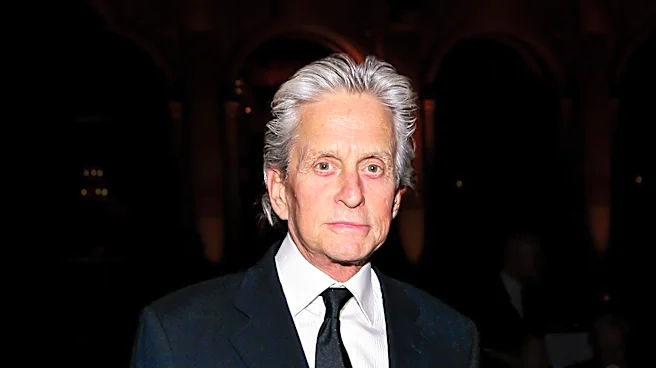
Actor Michael Douglas recently made headlines for comments questioning Cher's 1988 Academy Award win for Best Actress in 'Moonstruck,' suggesting his 'Fatal Attraction' co-star Glenn Close was more deserving for her role that year. Appearing on the U.K.'s
'The Graham Norton Show,' Douglas reunited with Close, who is set to receive an honorary Oscar at the 2026 Governors Awards. Close, who has been nominated eight times without a win, joked that the honorary award was due to the Academy's guilt. Douglas then interjected, stating that Close 'should have won with Fatal Attraction,' noting it was her fourth nomination. He explicitly mentioned Cher's win for 'Moonstruck' in the same year, implying a perceived oversight by the Academy regarding Close's performance. This exchange sparked laughter and exclamations of 'shade' from fellow guests and the audience.
Why It's Important?
Douglas's comments reignite a long-standing debate within Hollywood and among film enthusiasts about the subjective nature of awards and perceived snubs. Such public statements from prominent figures like Douglas can influence retrospective views on cinematic history and award decisions. For Glenn Close, who has a distinguished career but no competitive Oscar, these remarks highlight the industry's recognition of her talent, even if it didn't translate into a win for 'Fatal Attraction.' It also underscores the enduring impact of iconic performances and how they are judged against contemporary award outcomes. The discussion brings attention to the competitive landscape of the Academy Awards and the often-debated choices made by voters, potentially sparking renewed interest in both 'Fatal Attraction' and 'Moonstruck' and their respective lead performances.
What's Next?
Glenn Close is scheduled to receive her honorary Oscar at the 2026 Governors Awards on November 15. This event will likely bring further attention to her career and the ongoing discussion about her past Oscar nominations. Douglas's remarks may also prompt renewed media interest in the 1988 Academy Awards Best Actress category, potentially leading to retrospective analyses or interviews with other figures from that era. While unlikely to change historical outcomes, such discussions contribute to the ongoing narrative and critical evaluation of film history and the Academy's choices. The comments could also spark conversations among film critics and fans about other perceived Oscar snubs throughout history.
Beyond the Headlines
This incident touches upon the broader cultural phenomenon of re-evaluating historical artistic achievements and awards through a contemporary lens. It highlights how public perception and critical consensus can evolve over decades, sometimes diverging from the original award decisions. The 'snub' narrative, often fueled by actors themselves or their peers, reflects a deeper sentiment within the industry about recognizing enduring talent and impactful performances. It also subtly critiques the voting process of major awards, suggesting that certain performances might be overlooked or undervalued at the time of their release. Such discussions contribute to the rich tapestry of film lore and the continuous re-assessment of cinematic legacies.