







What's Happening?
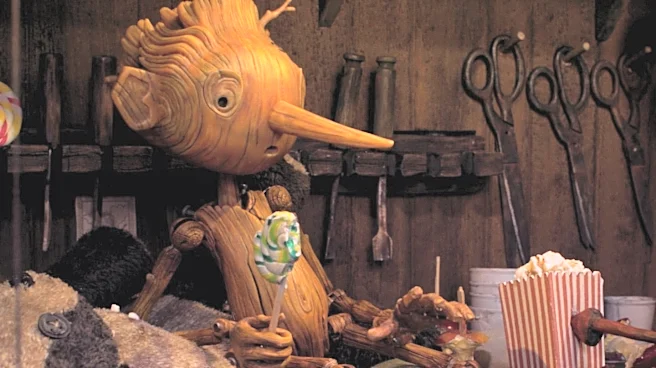
Laika's stop-motion animated film, 'Wildwood,' has received a PG-13 rating, making it the first mainstream Western animated movie to do so. This decision has ignited a discussion within the animation industry regarding the perceived infantilization of
Western animation, which typically targets G or PG ratings. While 'Wildwood' embraced its PG-13 content, other animated films like Netflix and Skydance Animation's 'Ray Gunn' and DreamWorks Animation's 'Forgotten Island' reportedly trimmed content to avoid a PG-13 rating. Industry insiders suggest that the Motion Picture Association (MPA) rates animated films more strictly than live-action movies, and studios are often hesitant to risk limiting their audience by pursuing higher ratings, despite the success of PG-13 live-action films.
Why It's Important?
The PG-13 rating for 'Wildwood' is significant because it challenges a long-standing industry practice that largely confines mainstream Western animation to younger audiences. This move could potentially open doors for more complex and mature animated storytelling, catering to a broader demographic, including Gen Alpha and Gen Z viewers who are accustomed to diverse animated content from international markets like Japan. The current reluctance of major studios to embrace PG-13 animation stems from financial concerns, as they fear limiting the film's reach and profitability. However, if 'Wildwood' proves to be a financial success, it could demonstrate a viable market for animated films that tackle more mature themes, potentially shifting industry standards and expanding the creative scope for animators and storytellers.
What's Next?
The financial performance of 'Wildwood' will be a critical indicator for the future of PG-13 animated films in the West. If successful, it could encourage other studios, including DreamWorks Animation and Sony Pictures Animation, to reconsider their approach to ratings and content. There is a growing sentiment among filmmakers that animation is a medium, not a genre, and should not be exclusively tied to children's entertainment. The debate also highlights the need for a more consistent application of rating standards across live-action and animated productions. Future developments may include studios experimenting with dual releases (PG and PG-13 versions) or a gradual increase in animated films targeting older audiences, driven by evolving audience preferences and the success of pioneering projects like 'Wildwood.'
Beyond the Headlines
The discussion around 'Wildwood' and its PG-13 rating touches upon deeper cultural implications regarding the perception of animation in the West. Unlike in some Eastern cultures where animation is widely accepted as a versatile art form for all ages, Western animation has often been relegated to the 'kid's table.' This perception can limit artistic expression and thematic depth in animated productions. The push for PG-13 animated films is not just about ratings; it's about validating animation as a legitimate medium for serious, complex, and diverse storytelling. Overcoming this ingrained bias could lead to a renaissance in Western animation, fostering greater creative freedom and allowing animated films to explore a wider range of human experiences and societal issues, mirroring the thematic breadth seen in live-action cinema.