



What's Happening?
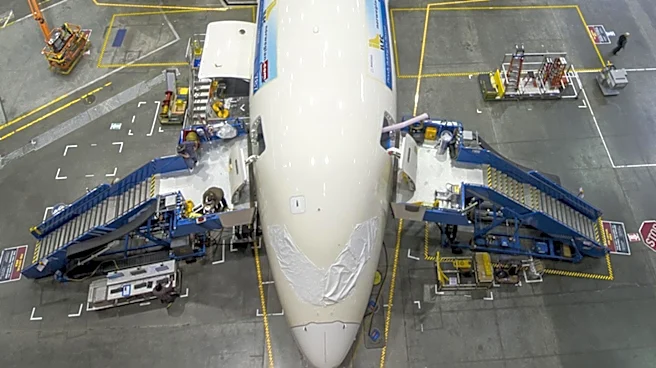
Boeing CEO Kelly Ortberg has acknowledged that the company's recovery plan for 737 production is facing at least a year-long delay. The original goal, known as 'Plan 47,' aimed to increase monthly 737 production to 47 aircraft by summer 2026. However,
this deadline was missed, and the new target for reaching 47 planes per month has been pushed to January 2027. Ortberg cited higher costs, issues with wing production, and broader supply chain difficulties as primary reasons for the setback. The company also hopes to certify an additional 737 production line to eventually reach 52 planes per month sometime in 2027. Boeing currently has over 6,300 outstanding orders for commercial aircraft, highlighting the significant demand it needs to meet.
Why It's Important?
This delay in Boeing's 737 production has significant implications for the U.S. aerospace industry and its stakeholders. Airlines, eager to modernize their fleets with more fuel-efficient aircraft, will face longer waiting times, potentially impacting their operational costs and expansion plans. For Boeing, the inability to ramp up production as planned could strain relationships with customers and potentially lead to financial penalties or lost orders if competitors can deliver faster. The broader U.S. manufacturing sector is also affected, as the aerospace and defense industries, which generated nearly a trillion dollars in revenue in 2025, are competing with the burgeoning AI data center industry for skilled labor, construction services, and critical components like chips and electronic parts. This competition drives up costs and limits the availability of resources, making it harder for aerospace suppliers to expand their capacities.
What's Next?
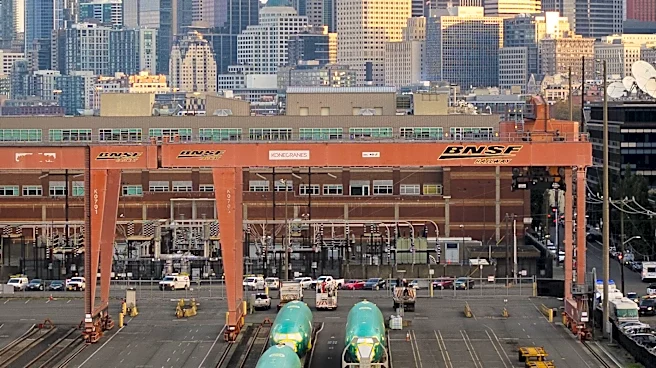
Boeing's revised production schedule will require its suppliers to adjust their own plans, which could be challenging given past unmet targets. Smaller suppliers, in particular, need reliable forecasts from Boeing to justify investments in hiring staff, purchasing materials, and expanding production facilities. If Boeing's plans continue to shift, these suppliers risk having capital tied up in unused inventory and capacity. The ongoing competition for resources with the AI data center industry means that the availability of skilled workers, construction firms, and electronic components will remain a critical factor in Boeing's ability to meet its new production goals. The company will need to work closely with its supply chain partners to ensure they can scale up effectively, despite the broader market pressures.
Beyond the Headlines
The challenges faced by Boeing underscore a deeper trend in the U.S. industrial landscape: the increasing competition for resources across diverse high-growth sectors. The aerospace and defense industries, traditionally dominant in their demand for specialized components and skilled labor, are now contending with the rapid expansion of AI data centers. This competition extends to basic materials like steel, electrical switches, and even air conditioning systems, as well as advanced components like memory chips. While the aerospace industry has historically relied on single suppliers for cost efficiency, this model is proving vulnerable when demand surges and suppliers lack the capacity or workforce. The debate over reshoring critical input production to the U.S. is gaining traction, but as the American Aerospace Industry Association notes, this could significantly increase costs, especially for lower-volume parts. This situation highlights the complex interplay between technological advancement, supply chain resilience, and national industrial strategy.