








What's Happening?
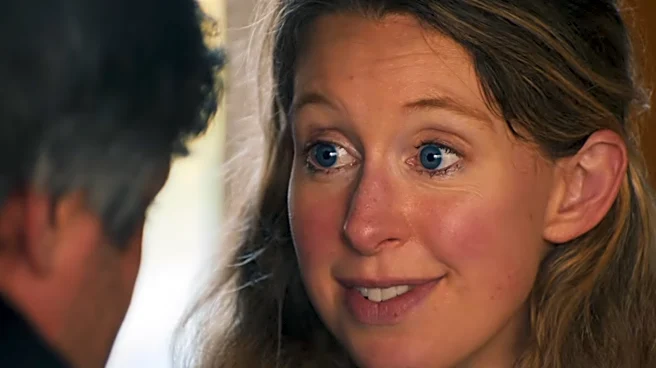
Actress Amanda Seyfried is a prominent figure in Nathan Fielder and Lance Oppenheim's new documentary, 'You Can See Everything,' which delves into the life of Theranos founder Elizabeth Holmes. The film, which has achieved the number one spot at the box
office, explores Holmes's perspective on her legal troubles and her current relationship with Billy Evans. Seyfried, who previously won an Emmy for portraying Holmes in the TV miniseries 'The Dropout,' participates in discussions and recreates scenes for the documentary where Fielder was unable to film. Her involvement adds a meta-narrative layer, as the film examines how media portrayals, including her own, have shaped public opinion of Holmes. The documentary questions the nature of truth and manipulation, particularly in how Holmes presents herself and how others, including her partner Evans, interact with her narrative. The film has generated significant discussion regarding its approach to documentary filmmaking and its portrayal of complex figures.
Why It's Important?
The documentary's success and its unique approach to storytelling are significant for the entertainment industry, particularly in the realm of non-fiction filmmaking. By featuring Amanda Seyfried, an actress known for her portrayal of Elizabeth Holmes, the film blurs the lines between dramatization and reality, prompting audiences to critically evaluate media narratives. This raises important questions about the responsibility of filmmakers and actors in shaping public perception of real-life figures, especially those involved in high-profile legal cases. The film's exploration of Holmes's perceived manipulation and the influence of her partner, Billy Evans, also highlights broader societal issues concerning accountability, victimhood, and the power dynamics within relationships. The financial success of a documentary with such complex themes suggests a growing audience appetite for nuanced and thought-provoking non-fiction content, potentially influencing future documentary productions and their engagement with controversial subjects.
What's Next?
The documentary 'You Can See Everything' is expected to continue its strong box office performance and will likely be a significant contender during awards season, with the National Board of Review anticipated to consider it next month. The film's unique blend of documentary and meta-narrative elements could influence future filmmaking trends, encouraging more experimental approaches to non-fiction storytelling. Discussions surrounding the ethical implications of portraying real-life figures and the impact of media on public perception are also likely to persist. The film's success may also lead to increased scrutiny of the subjects it covers, particularly Elizabeth Holmes and Billy Evans, and their ongoing public narratives. The involvement of a high-profile actress like Amanda Seyfried in such a project could also pave the way for other actors to engage in similar roles that challenge traditional documentary formats.
Beyond the Headlines
The documentary 'You Can See Everything' delves into profound ethical and philosophical questions about truth, perception, and manipulation. By presenting Elizabeth Holmes in a way that leaves the audience questioning her innocence or culpability, the film challenges the very notion of objective reality in media. The inclusion of Amanda Seyfried, who played Holmes in a fictionalized series, further complicates this, highlighting how dramatizations can influence real-world understanding and even the experiences of the subjects themselves. The film implicitly critiques the audience's own biases and their readiness to accept certain narratives, especially when presented by charismatic figures or through compelling storytelling. This raises a broader societal concern about media literacy and the ability of individuals to discern fact from carefully constructed narratives, particularly in an age where information is constantly curated and reinterpreted. The film's exploration of Billy Evans's controlling behavior also touches upon the subtle ways manipulation can operate within personal and public spheres, adding a layer of psychological complexity to the overall narrative.