





What's Happening?
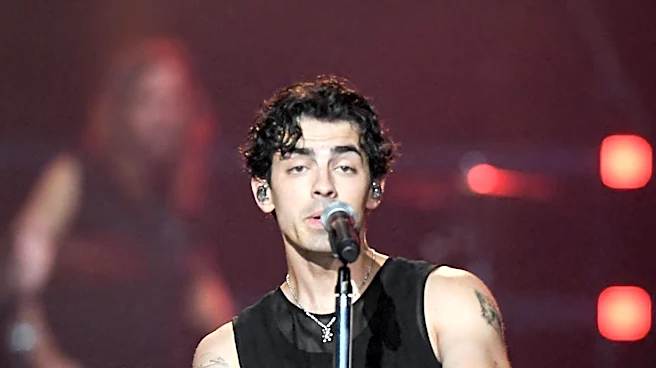
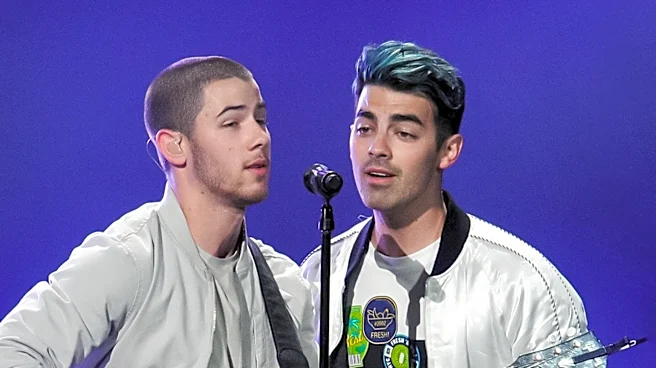
During a Jonas Brothers concert, singer Joe Jonas confronted a fan who repeatedly touched him without consent while he was performing in the audience. The incident occurred during the song “Backwards,” when Jonas moved closer to concertgoers. While one
fan sang along with him, another audience member repeatedly reached out to touch his arm and neck. Jonas continued his performance but clearly expressed his discomfort, telling the individual, “Let’s not do that, honey!” This direct statement was aimed at stopping the unwanted physical contact. Despite his request, the fan continued to reach for him, leading to intervention from security personnel. Jonas concluded the segment by embracing the fan who had been singing with him, distinguishing between consensual interaction and unwanted touching. The event has brought attention to the critical issue of boundaries between performers and their audiences during live shows.
Why It's Important?
This incident underscores the broader discussion about performer safety and audience etiquette in live entertainment settings. While artists often engage with crowds to create memorable experiences, such interactions do not grant audience members permission to touch performers without explicit consent. Jonas’s handling of the situation is significant because he addressed the issue directly and firmly while maintaining the flow of the performance, rather than abruptly ending the segment. This response highlights that performers are entitled to set personal boundaries, even when actively engaging with their fans. The event also emphasizes the crucial role of concert security in managing audience behavior and intervening when boundaries are crossed, ensuring a safe environment for both artists and attendees. It serves as a reminder to the entertainment industry and concert-goers about respecting personal space and consent.
What's Next?
The incident involving Joe Jonas is likely to fuel ongoing conversations within the music industry regarding performer-audience interactions and security protocols at live events. Concert organizers and venues may review and reinforce their security measures and guidelines for audience behavior to prevent similar occurrences. Artists and their management teams might also consider more explicit communication about boundaries during performances or implement clearer stage designs that allow for audience engagement while minimizing unauthorized physical contact. For fans, this event serves as a public reminder of the importance of respecting performers' personal space and consent, potentially influencing future concert etiquette. The broader discussion could lead to increased awareness campaigns or updated policies aimed at fostering a safer and more respectful environment at live music events.
Beyond the Headlines
The incident transcends a mere concert disruption, touching upon deeper societal norms regarding personal boundaries and consent, particularly in public and high-energy environments. It highlights the often-blurred lines between admiration and entitlement that some fans may feel towards public figures. Ethically, it reinforces the principle that fame does not negate an individual's right to bodily autonomy. Legally, such unwanted physical contact could be viewed as assault, underscoring the need for clear legal protections for performers. Culturally, the event contributes to a growing discourse about respectful fan engagement in the digital age, where access to celebrities can sometimes be misconstrued as permission for physical interaction. This development could prompt a re-evaluation of how fan culture is shaped and how boundaries are communicated and enforced in the entertainment sphere, potentially leading to a more respectful and safer environment for artists.