
What's Happening?
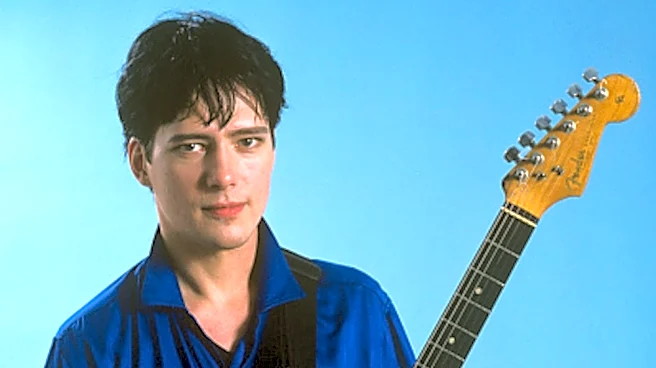
Richard Lloyd, the renowned guitarist for the influential 1970s New York City band Television, passed away on Saturday at his home in Chattanooga, Tennessee, at the age of 75. The cause of death was bile
duct cancer. Lloyd's distinctive and fiery guitar work was a crucial component of Television's sound, which, despite being associated with the punk rock movement, was characterized by intricate soloing, unusual song structures, and frontman Tom Verlaine's vocals. The band's 1977 album, 'Marquee Moon,' is considered a seminal work of the era, featuring tracks like 'See No Evil' and the nearly 11-minute title track, and significantly influenced subsequent alternative rock bands such as R.E.M. and Sonic Youth. Television's initial peak was brief, lasting only two albums before their split in 1978, though they reformed multiple times over the years.
Why It's Important?
Richard Lloyd's passing marks the loss of a significant figure in American rock music history. His contributions to Television, particularly his guitar work, were instrumental in shaping the sound of the burgeoning New York punk and new wave scene of the 1970s. Television's unique blend of intricate musicianship and raw energy provided a counterpoint to the more aggressive punk bands of the time, demonstrating that complexity and artistry could coexist within the emerging alternative rock landscape. The band's album 'Marquee Moon' remains a touchstone for musicians and critics, influencing generations of artists and solidifying its place as a classic. Lloyd's legacy extends beyond his work with Television, encompassing solo albums and collaborations, underscoring his enduring impact on the evolution of rock guitar and alternative music in the United States.
What's Next?
The legacy of Richard Lloyd and Television is expected to continue influencing musicians and be celebrated by fans of alternative rock. His death will likely prompt renewed interest in Television's discography, particularly 'Marquee Moon,' and his solo work. Music critics and historians may further analyze his unique guitar style and its impact on the genre. Tributes from fellow musicians and industry figures are anticipated, highlighting his contributions to music. While the band's peak era was decades ago, their influence remains, and Lloyd's passing serves as a reminder of the foundational artists who shaped the sound of modern rock music. His work will continue to be studied and appreciated by future generations of guitarists and music enthusiasts.
Beyond the Headlines
Richard Lloyd's career, marked by both musical brilliance and personal struggles with mental health and substance abuse, reflects a common narrative within the music industry. His story highlights the often-unseen challenges faced by artists, even those who achieve critical acclaim and influence. The dynamic between Lloyd and Tom Verlaine, characterized by both collaboration and friction, also speaks to the complex interpersonal relationships that can drive creative output in bands. Television's role in initiating the legendary CBGB club in Lower Manhattan underscores their pivotal position in the birth of punk rock, demonstrating how a single band's presence can catalyze an entire cultural movement. Lloyd's enduring influence, despite the band's relatively short initial run, emphasizes that artistic impact is not always measured by commercial success but by lasting creative resonance.