







What's Happening?
French research institutes and chip startups are actively seeking Taiwanese partners for early-stage research and development in semiconductors, signaling a shift in Europe's perception of Taiwan from merely a contract manufacturer to a key collaborator
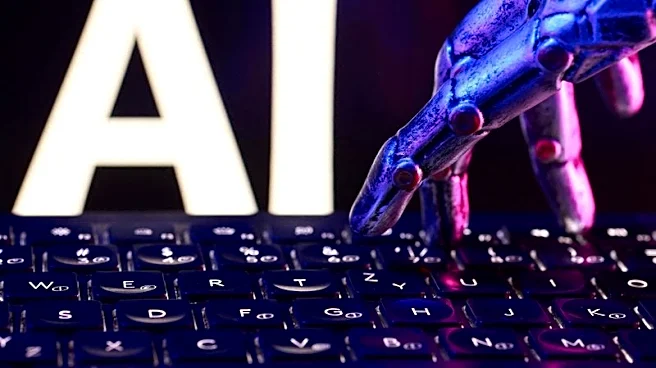
in advanced technology. This new approach, articulated by Bruno Paing, head of international affairs at CEA-Leti, France's leading microelectronics research laboratory, aims to engage Taiwan in upstream technology development before commercialization. A significant example is the multiyear strategic agreement between CEA-Leti, its sister institute CEA-List, and Taiwan's Powerchip Semiconductor Manufacturing Corp. (PSMC). This partnership combines French expertise in silicon photonics, optical interconnects, and RISC-V chip architecture with PSMC's manufacturing strength in advanced processes like 3D stacking, focusing on developing energy-efficient solutions for next-generation AI systems. This initiative aligns with France's broader industrial policy, France 2030, which prioritizes AI and semiconductors, and the European Chips Act.
Why It's Important?
This deepening collaboration signifies Europe's strategic effort to enhance its semiconductor capabilities and reduce its reliance on external supply chains, particularly in the face of global chip shortages and geopolitical tensions. By engaging Taiwan at the R&D stage, France aims to integrate Taiwanese innovation into its own technological ecosystem, fostering greater self-sufficiency and competitiveness in critical areas like AI and high-performance computing. For Taiwan, this partnership offers an opportunity to diversify its international collaborations beyond traditional manufacturing roles and strengthen its position as a global leader in semiconductor innovation. The focus on energy-efficient AI systems addresses a critical global demand, as the computing power required for AI applications continues to grow, making energy consumption a significant concern. This collaboration could lead to breakthroughs that benefit both European and Taiwanese industries, fostering economic growth and technological advancement.
What's Next?
The partnership between CEA and PSMC is expected to progress with joint development and commercialization of key technologies for next-generation AI systems, focusing on lower power consumption and faster data transmission. France, through initiatives like France 2030 and the European Chips Act, will likely continue to seek similar R&D collaborations with Taiwanese entities, expanding into other areas of advanced microelectronics. This could lead to more joint ventures, technology transfers, and talent exchanges between France and Taiwan. The success of these early-stage partnerships could also encourage other European nations to pursue deeper R&D collaborations with Taiwan, further integrating Taiwan into the European semiconductor strategy. The ongoing efforts to strengthen Europe's homegrown chip design industry will also be crucial for leveraging these partnerships effectively.
Beyond the Headlines
This strategic shift reflects a broader global trend where nations are increasingly prioritizing technological sovereignty and resilience in critical sectors like semiconductors. The move from a purely transactional manufacturing relationship to a collaborative R&D partnership indicates a recognition of Taiwan's deep expertise across the entire semiconductor value chain, not just its foundry capabilities. This collaboration also highlights the growing importance of open architectures like RISC-V, which offer alternatives to proprietary technologies and foster greater innovation and competition. The focus on energy efficiency in AI systems points to the environmental and sustainability challenges inherent in the rapid expansion of digital technologies, making such R&D efforts crucial for future technological development. Ultimately, these partnerships could reshape the global semiconductor landscape, fostering a more distributed and resilient ecosystem for advanced chip development and production.