



What's Happening?
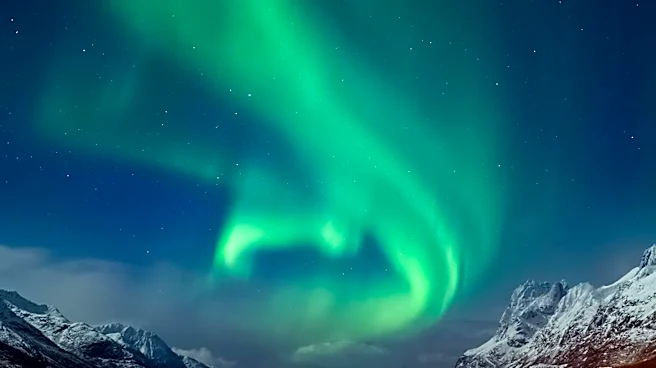
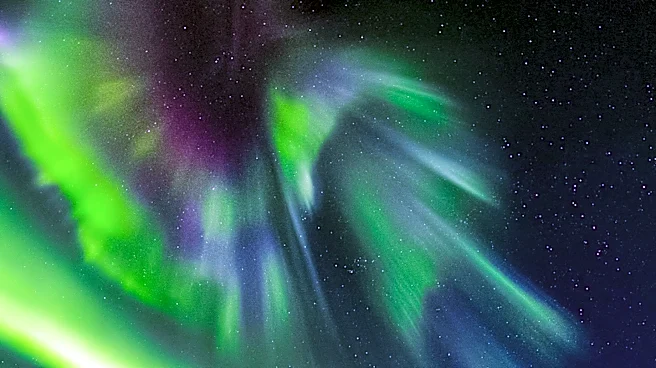
Tromsø, located in northern Norway, is highlighted as a premier destination for observing the Northern Lights, also known as the aurora borealis. The city provides a wide array of tours and activities designed to maximize the chances of seeing this natural
phenomenon. These options include guided Northern Lights chases, countryside tours featuring campfires, reindeer sledding trips combined with dinner, and visits to husky camps that offer traditional meals and aurora viewing opportunities. While independent aurora hunting is possible, guided tours are strongly recommended. Local guides possess expertise in monitoring weather and aurora forecasts, enabling them to drive away from cloud cover or city lights to find clearer skies, thereby increasing the likelihood of a successful sighting. The city's infrastructure is well-adapted for aurora tourism, offering reliable forecasts and diverse tour packages.
Why It's Important?
The emphasis on Tromsø as a prime Northern Lights destination underscores the growing global interest in astrotourism and unique natural phenomena. For the U.S. tourism industry, this highlights a competitive market for experiential travel, where destinations offering specialized, high-quality experiences attract international visitors. The recommendation for guided tours also points to the value of local expertise and curated experiences in enhancing tourist satisfaction and safety. This trend could influence U.S. travel agencies and tour operators to develop similar niche offerings, particularly in regions with unique natural attractions. Economically, the success of aurora tourism in Tromsø demonstrates the potential for significant revenue generation through specialized travel packages, accommodation, and related services, providing a model for other regions looking to capitalize on their natural assets.
What's Next?
As Tromsø continues to refine its Northern Lights tourism offerings, it is likely to see further innovation in tour packages, potentially incorporating more advanced technology for forecasting and viewing. Other regions globally with similar natural attractions may look to Tromsø's model to develop or enhance their own astrotourism industries. This could lead to increased competition in the experiential travel market, prompting destinations to differentiate their offerings through unique cultural integrations, environmental sustainability practices, or technological advancements. Travelers can anticipate a continued evolution of aurora viewing experiences, with a greater focus on personalized and immersive adventures, driven by both demand and technological progress in forecasting and tour management.
Beyond the Headlines
The popularity of Northern Lights tourism in Tromsø reflects a deeper human fascination with natural wonders and the desire for authentic, awe-inspiring experiences. Beyond the economic benefits, such tourism can foster a greater appreciation for environmental conservation and the delicate balance of natural ecosystems. The reliance on accurate weather and aurora forecasts also highlights the intersection of scientific understanding and tourism, where data-driven decisions directly impact visitor satisfaction. Furthermore, the integration of local culture, such as reindeer sledding and husky camps, enriches the tourist experience, promoting cultural exchange and supporting local communities. This blend of natural spectacle, scientific application, and cultural immersion offers a holistic travel experience that transcends mere sightseeing, contributing to a broader understanding and respect for the Arctic environment and its inhabitants.