



What's Happening?
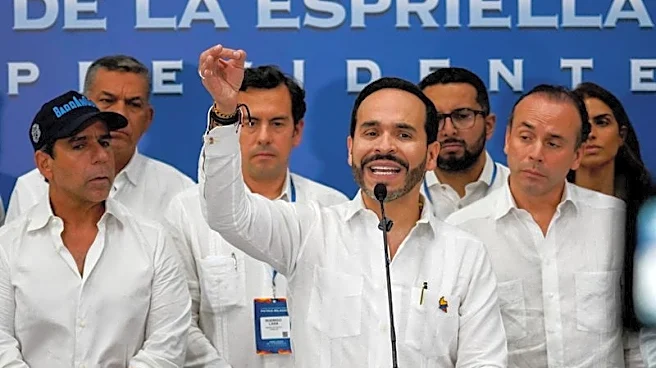
Abelardo de la Espriella is set to assume the presidency, inheriting significant economic challenges. The new administration faces a fiscal deficit projected to exceed 7% of GDP by year-end, a high public debt cost, and a persistent country risk. Inflation
has risen above 6%, and foreign direct investment has been declining for 14 consecutive months. The Carf has projected a fiscal deficit of 7.4% of GDP, which would be the second-highest in history. Juan Carlos Ramírez, director of the Carf, attributes the fiscal shortfall to government overspending rather than debt management. The nation faces substantial debt service obligations, with $19 billion in interest payments due in 2026 and $57 billion in 2027.
Why It's Important?
The economic situation presents a critical challenge for the new government, impacting fiscal policy and economic stability. The high fiscal deficit and debt levels could constrain public spending and necessitate austerity measures. Rising inflation and interest rates may affect consumer purchasing power and economic growth. The decline in foreign direct investment could hinder economic development and job creation. Addressing these issues will require strategic fiscal adjustments and economic reforms to restore confidence and stability.
What's Next?
The government will need to implement fiscal adjustments, potentially involving spending cuts and debt restructuring, to address the fiscal deficit. Monitoring inflation and interest rates will be crucial to prevent further economic strain. Efforts to attract foreign investment and improve the country's risk profile will be essential for economic recovery. The administration's ability to manage these challenges will be closely watched by economic stakeholders and could influence future policy directions.