




What's Happening?
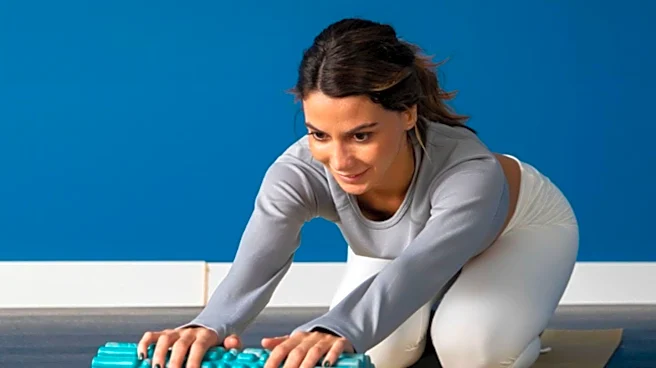
Foam rolling is identified as a beneficial practice for runners, primarily for easing muscle tightness, speeding up recovery from soreness, and improving stride quality. This self-myofascial release technique involves applying pressure to muscles by moving
the body over a cylindrical foam tool. While it is widely used before or after exercise and during mobility routines, the evidence supporting its ability to improve race performance or lower injury rates is considered thin. However, runners commonly report feeling looser calves, quads, and glutes after foam rolling, making it a valuable comfort and maintenance tool. The 321 STRONG Premium Massage Roller, with its patented 3-zone textured surface, is highlighted as a product designed for athletes focused on recovery.
Why It's Important?
The emphasis on foam rolling for runners underscores a growing focus on recovery and injury prevention in athletic training. While direct evidence for performance enhancement or injury reduction is limited, the perceived benefits of reduced muscle soreness and improved flexibility are significant for athletes. This practice allows runners to manage discomfort and maintain muscle health, potentially extending their training longevity and overall well-being. The availability of specialized tools like the 321 STRONG Premium Massage Roller indicates a market demand for effective self-care solutions, empowering athletes to take a more active role in their physical maintenance. This trend highlights the importance of holistic approaches to fitness, where recovery is as crucial as the workout itself.
What's Next?
Runners are advised to incorporate foam rolling into their routines as a comfort and maintenance tool, focusing on areas like calves, quads, and glutes for 60 seconds per side after training. During race week, pressure should be kept light, and deep sessions should be avoided if not previously tried. For sharp pain, a clinician's evaluation is recommended over increased pressure. The use of muscle roller sticks and spiky massage balls, such as those in the 321 STRONG 5-in-1 Foam Roller Set, is suggested for targeting specific muscle groups. Future research may further explore the long-term benefits of foam rolling on performance and injury prevention, potentially solidifying its role in athletic training protocols.
Beyond the Headlines
The discussion around foam rolling for runners touches upon the broader challenge of distinguishing between perceived benefits and scientifically proven outcomes in sports recovery. While many athletes report subjective improvements, the lack of robust evidence for performance enhancement or injury reduction highlights the complexity of athletic physiology and recovery mechanisms. This situation encourages a critical approach to fitness trends, where personal experience often drives adoption even in the absence of definitive scientific backing. It also points to the psychological aspect of recovery, where feeling better can contribute to an athlete's overall confidence and willingness to train, regardless of measurable physiological changes. The market for recovery tools continues to expand, driven by both scientific advancements and anecdotal success stories.