






What's Happening?
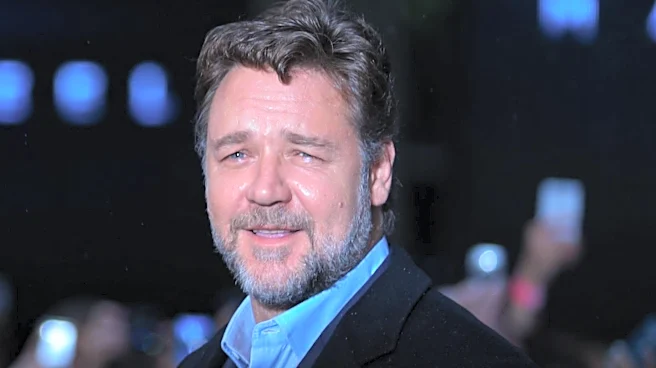
Actor Russell Crowe initially believed the film 'Gladiator' would be a disaster, despite it later winning him an Oscar for Best Actor and achieving significant critical and commercial success. According to the source, Crowe found the script to be 'terrible'
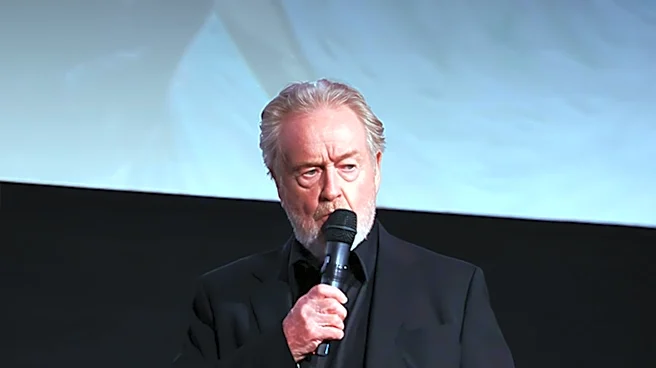
and an 'absolute turnip' during production. He particularly objected to scenes depicting gladiators with sponsors on their armor, deeming it ridiculous, even when assured of its historical accuracy. The production faced numerous challenges, including an unfinished script that required constant rewrites, creative disagreements, and the tragic death of actor Oliver Reed during filming. Crowe's frustration was so pronounced that he and director Ridley Scott had only agreed on 21 pages of the script at the beginning of shooting, out of a typical 100-110 pages. This led to significant delays and continuous script revisions, which further annoyed Crowe, who often received his lines late.
Why It's Important?
This revelation highlights the often chaotic and unpredictable nature of film production, even for what ultimately become critically acclaimed and commercially successful movies. It underscores that the creative process is not always linear or harmonious, and that even key talent can harbor significant doubts about a project's potential. For the film industry, it serves as a reminder that initial perceptions and on-set challenges do not necessarily dictate a film's ultimate fate. It also offers insight into the pressures faced by actors and directors, who must navigate creative differences and logistical hurdles while maintaining their artistic vision. The success of 'Gladiator' despite these internal struggles demonstrates the resilience and collaborative effort required to bring a major motion picture to fruition, and how a project can transcend its difficult origins to achieve iconic status.
What's Next?
While 'Gladiator' is a historical film, the insights into its production process could influence future filmmaking strategies, particularly regarding script development and managing creative expectations. The ongoing discussion about the film's challenging creation may encourage more transparent conversations within the industry about production difficulties and how they are overcome. For fans of the film and Russell Crowe, this information adds another layer to the legacy of 'Gladiator,' potentially sparking renewed interest in behind-the-scenes documentaries or interviews that delve deeper into these production anecdotes. The film's enduring popularity, available on platforms like Prime Video, ensures that its story, both on and off-screen, will continue to be revisited and analyzed by audiences and film scholars alike.
Beyond the Headlines
The story of 'Gladiator's' tumultuous production and Russell Crowe's initial skepticism offers a broader commentary on the subjective nature of artistic creation and the often-unforeseen paths to success. It challenges the notion that great art must emerge from a perfectly executed plan, instead suggesting that sometimes, masterpieces are born out of chaos and persistent effort. This narrative can resonate beyond the film industry, illustrating that doubt and adversity are common components of any ambitious endeavor. It also highlights the role of leadership, as director Ridley Scott's conviction ultimately guided the project to its triumphant conclusion despite the lead actor's reservations. The film's ability to overcome such significant internal hurdles to become a cultural touchstone speaks to the power of collective vision and perseverance in the face of uncertainty.