



What's Happening?
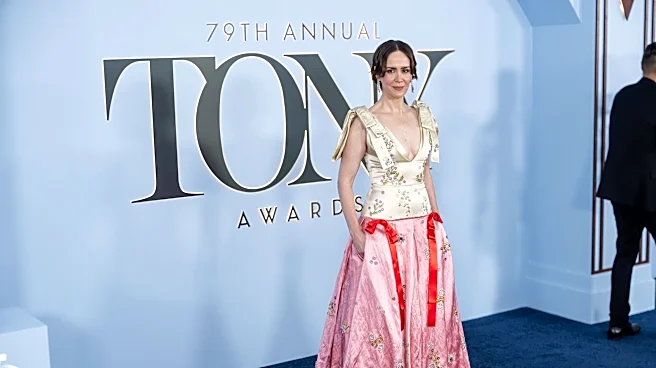
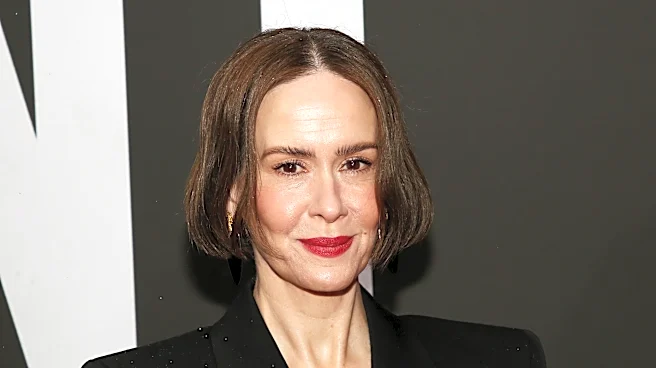
Actress Sarah Paulson has publicly stated her reasons for not marrying her partner, Holland Taylor, despite their relationship spanning over a decade. Paulson, who began dating Taylor in 2015, expressed on Chelsea Handler’s 'Dear Chelsea' podcast that
she is content with not being married, feeling it allows her to maintain a sense of self. She clarified that while she feels a deep bond and connectivity with Taylor, akin to being married, she does not feel the need for a formal, 'written in stone' commitment. Paulson emphasized that this decision is not about seeking independence from Taylor or pursuing other relationships, but rather about preserving her own individual autonomy.
Why It's Important?
Sarah Paulson's candid remarks on marriage and personal independence resonate with a broader societal shift in how relationships are perceived and structured in the U.S. Her perspective challenges traditional notions that marriage is the ultimate or necessary culmination of a committed partnership. This stance is particularly significant for the LGBTQ+ community, where diverse relationship models are often embraced and celebrated. By openly discussing her choice, Paulson contributes to normalizing conversations around non-traditional relationship structures and individual autonomy within long-term partnerships. Her comments may empower others to define their relationships on their own terms, free from societal pressures or expectations, thereby influencing evolving social norms around commitment and partnership.
What's Next?
Paulson's statements are likely to continue fueling discussions about the evolving nature of relationships and the definition of commitment in modern society. While her personal choice may not directly alter public policy, it contributes to a cultural dialogue that increasingly values individual freedom and diverse relationship models. This could lead to greater acceptance and understanding of various forms of partnership beyond traditional marriage. For public figures, such openness can set a precedent for discussing personal choices that deviate from conventional norms, potentially encouraging more nuanced conversations about lifestyle and relationship preferences in the public sphere. The entertainment industry, in particular, may see further representation of non-traditional relationships in its narratives.
Beyond the Headlines
The deeper implications of Paulson's decision touch upon the psychological and philosophical aspects of commitment and selfhood. Her desire to maintain a 'sense of myself' through not marrying highlights the tension between individual identity and relational merging, a common theme in human psychology. It also raises questions about the symbolic weight of marriage in contemporary culture and whether its traditional legal and social frameworks adequately serve all individuals. This perspective can encourage a re-evaluation of what truly constitutes a 'successful' or 'committed' relationship, moving beyond legal contracts to focus on emotional connection and mutual respect. It also underscores the importance of personal agency and the right to define one's own life path, even when it diverges from societal expectations.