


What's Happening?
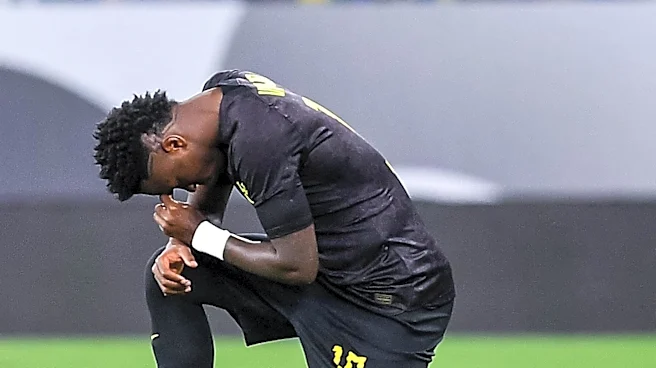
Former NFL player Colin Kaepernick has reflected on his 2016 National Anthem protest and its subsequent impact on his life. In an exclusive interview with NBC News' Rohan Nadkarni, Kaepernick discussed the motivations behind his decision to kneel during
the National Anthem at NFL games. This act was a form of protest against racial injustice and police brutality in the United States. His actions sparked a nationwide debate about freedom of speech, patriotism, and social activism within professional sports. The protest began during the 2016 NFL preseason and continued throughout the regular season, drawing both widespread support and significant criticism. Kaepernick's stance ultimately led to him becoming a free agent after the 2016 season and he has not played in the NFL since, leading many to believe he was blackballed from the league due to his activism.
Why It's Important?
Kaepernick's protest ignited a crucial national conversation about systemic racism and police misconduct, bringing these issues to the forefront of public discourse. His actions transcended the realm of sports, influencing discussions in politics, civil rights, and corporate responsibility. The controversy highlighted the power of athletes as social activists and the potential consequences they face for taking political stands. It also exposed deep divisions within American society regarding race, justice, and national symbols. For the NFL, the protest created a significant public relations challenge, forcing the league to navigate complex issues of player expression, fan sentiment, and political pressure. The ongoing debate surrounding Kaepernick's career and his protest continues to shape how professional sports leagues and their athletes engage with social and political issues, setting a precedent for future athlete activism.
What's Next?
While Kaepernick has not returned to the NFL, his legacy as an activist continues to evolve. His reflections suggest an ongoing commitment to social justice, and it is likely he will continue to use his platform to advocate for change. The NFL and other sports leagues will likely continue to grapple with how to balance player rights to protest with maintaining fan engagement and avoiding political controversy. Future athlete protests are probable, and the responses from leagues, teams, and the public will be heavily influenced by the precedent set by Kaepernick's actions. Discussions around racial justice and police reform, which Kaepernick helped amplify, remain prominent in national conversations, indicating that the issues he raised are far from resolved and will continue to be addressed by various social and political movements.
Beyond the Headlines
Kaepernick's protest brought to light the complex interplay between sports, politics, and social justice in America. It challenged the traditional notion of athletes as apolitical figures and underscored the ethical responsibilities of public figures to address societal injustices. The controversy also raised questions about corporate power and its influence on individual expression, particularly in industries like professional sports where contracts and public image are paramount. Furthermore, it highlighted the enduring struggle for racial equality in the U.S. and the different ways individuals choose to confront it. The long-term cultural impact of his protest is evident in the continued discussions about athlete activism and the evolving understanding of patriotism and dissent in a diverse society.