






What's Happening?
Tesla has reported a significant rebound in vehicle deliveries for the second quarter of 2026, marking it as the company's fourth best quarter ever. During this period, Tesla delivered 480,126 vehicles, a notable achievement given the company's recent
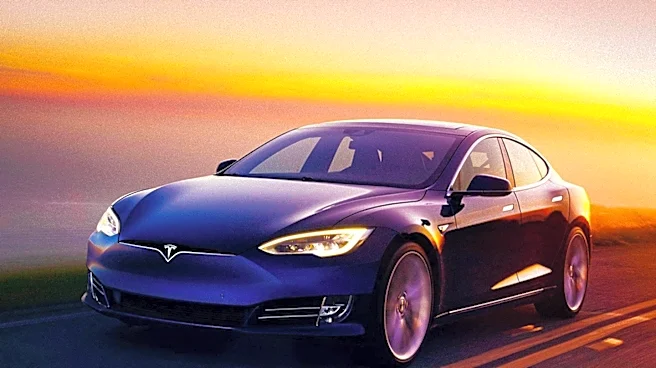
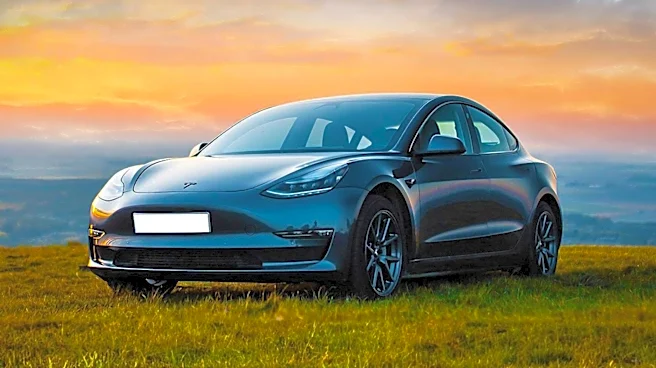
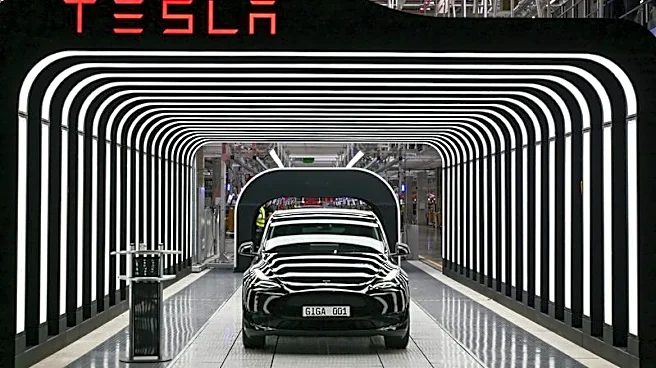
trend of declining sales. Historically, Tesla's best quarters were driven by external factors such as the end of federal EV tax credits and changes in market incentives. However, the strong performance in Q2 2026 does not have a similar straightforward explanation. The increase in sales was partly attributed to the introduction of cheaper versions of the Tesla Model 3 and Model Y in Europe, which were more affordable compared to their U.S. counterparts. Additionally, geopolitical tensions, such as the war in Iran and the closure of the Strait of Hormuz, led to higher gas prices, prompting a shift towards electric vehicles. Tesla's ability to deliver vehicles quickly gave it an advantage in this environment. The company also plans to increase production at its German factory by 20% to meet demand.
Why It's Important?
Tesla's strong sales performance in Q2 2026 is significant as it suggests a potential turnaround for the company amidst a period of declining sales. The increase in deliveries highlights Tesla's resilience and ability to adapt to changing market conditions, such as geopolitical tensions and fluctuating fuel prices. This development could bolster investor confidence and impact Tesla's stock performance positively. Moreover, the company's decision to boost production in Germany indicates a strategic move to capitalize on the growing demand for electric vehicles in Europe. However, the reported 20% drop in U.S. sales, as estimated by Cox Automotive, suggests that Tesla may need to address challenges in its home market to sustain its growth trajectory.
What's Next?
Tesla's future performance will likely depend on its ability to maintain and expand its market share in key regions. The planned increase in production at the German factory could help meet European demand, but the company may need to implement strategies to address the decline in U.S. sales. Additionally, Tesla's response to ongoing geopolitical tensions and their impact on fuel prices will be crucial. The company may also explore further innovations or pricing strategies to enhance its competitive edge. Stakeholders will be watching closely to see if Tesla's Q2 2026 performance is a temporary spike or indicative of a longer-term recovery.