






What's Happening?
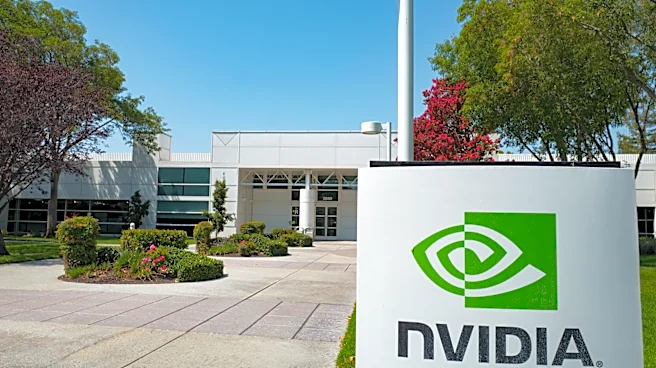
NVIDIA, a leading AI chip manufacturer, is navigating a complex situation in China due to U.S. export restrictions on advanced AI chips. While China remains a significant market for advanced computing technology, U.S. regulations have made it increasingly
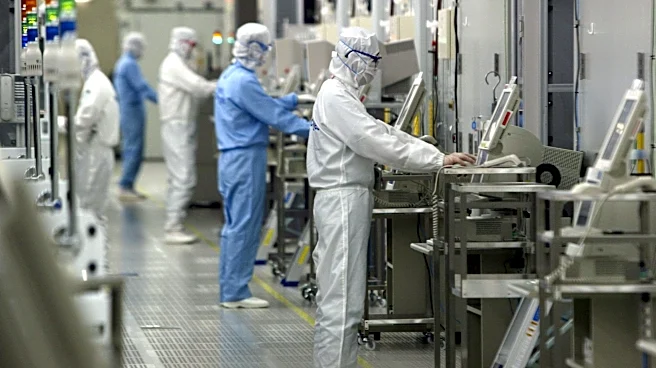
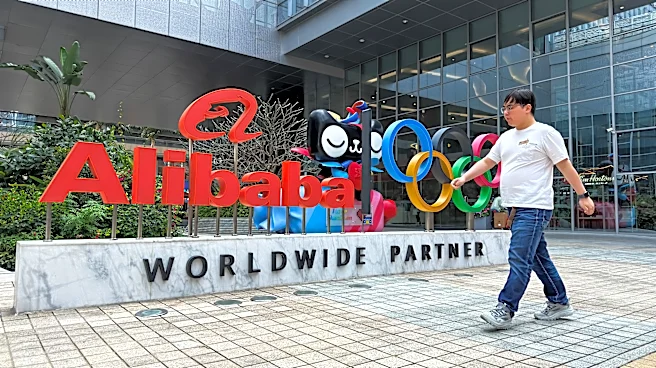
difficult for NVIDIA to sell its most powerful AI chips directly to Chinese customers. A Reuters report from November 2026 indicated that approximately 600,000 NVIDIA H200 chips were held in Hong Kong awaiting shipment approval to mainland China, illustrating the tension between Chinese demand and U.S. restrictions. Chinese technology giants like ByteDance, Alibaba, and Tencent have reportedly ordered over three million NVIDIA RTX PRO 5500 graphics cards, valued at more than $35 billion, as they explore alternatives that comply with export limitations.
Why It's Important?
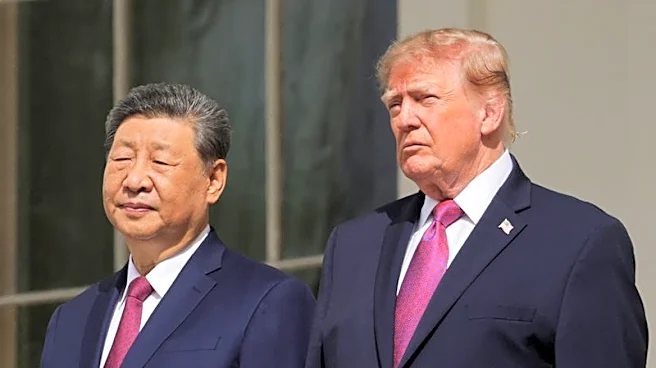
This situation presents a significant challenge for NVIDIA, impacting not only its immediate revenue but also posing a long-term competitive risk. China's technology companies, research institutions, and cloud providers have substantial demand for AI processors, representing a major commercial opportunity for NVIDIA. However, U.S. export restrictions, aimed at protecting national security and maintaining America's technological advantage, have placed NVIDIA in the middle of a larger geopolitical competition. If NVIDIA loses significant access to this market, Chinese semiconductor companies, such as Huawei, could gain opportunities to strengthen domestic chip development, reduce reliance on foreign technology, and build stronger technology ecosystems, potentially eroding NVIDIA's market dominance over time.
What's Next?
NVIDIA faces a critical strategic decision: whether to continue pushing compliant products in China, even if they are less powerful than its global offerings, or to focus resources on less restricted markets. Both approaches carry risks. A withdrawal from China could empower domestic competitors, while continued engagement requires navigating evolving U.S. regulations, Chinese import restrictions, and geopolitical uncertainties. The situation also implies a potential fragmentation of the global technology market, where companies may need separate supply chains and technology strategies for different countries. Investors and technology businesses will closely monitor NVIDIA's approach, as it could influence the future of AI infrastructure development and technological innovation globally.
Beyond the Headlines
The challenges faced by NVIDIA in China highlight the broader implications of U.S.-China trade restrictions on the global AI industry. Artificial intelligence relies heavily on computing capacity, semiconductor manufacturing, and advanced hardware. When access to these technologies becomes politicized, it can lead to a more fragmented global technology market. This could force companies to develop regional partnerships and adapt their strategies to comply with diverse regulatory environments. The long-term consequence might be a shift in where technological innovation takes place and which companies emerge as leaders in the AI space, potentially fostering a more distributed and competitive landscape for AI development worldwide.