







What's Happening?
Maya Kaimal, a brand known for making Indian food accessible in the U.S., has launched the first widely available Chinese Indian food line. This new product range includes seven items such as Fried Rice, Noodles, and Stir-Fry Sauces. The cuisine, which
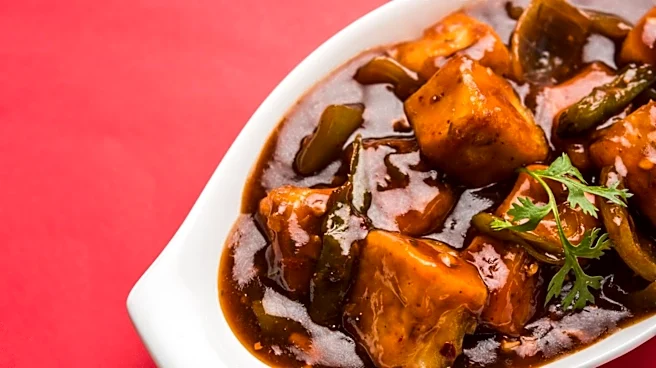
originated from the Chinese immigrant community in Kolkata in the 19th century, combines Indian aromatics like ginger, garlic, and green chili with soy-forward, wok-inspired Chinese flavors. The products are designed to offer complex, restaurant-quality Chinese Indian meals that can be prepared quickly at home. The line is crafted with clean, non-GMO certified ingredients, free from preservatives and artificial flavors. Products like Pineapple and Toasted Garlic Fried Rice and Hakka and Sweet Chili Crisp Noodles are now available at Whole Foods Market nationwide, while Sprouts Farmers Market carries the fried rices and various stir-fry sauces.
Why It's Important?
The introduction of Maya Kaimal's Chinese Indian food line marks a significant development in the U.S. food market, bringing a popular global fusion cuisine to a broader American audience for the first time. This move caters to an increasing consumer demand for diverse and authentic international flavors, expanding the culinary landscape beyond traditional offerings. For consumers, it provides convenient access to a unique flavor profile that has been a staple in India for generations, offering a new option for quick and flavorful home-cooked meals. For the food industry, it highlights a growing trend towards ethnic food innovation and the potential for success in niche markets that blend different culinary traditions. This launch could also inspire other food manufacturers to explore and introduce more global fusion cuisines to the American market, further diversifying grocery store shelves and influencing American dietary habits.
What's Next?
Following the launch, Maya Kaimal will likely monitor consumer reception and sales performance of its new Chinese Indian line. Success in this initial rollout could lead to an expansion of the product range, potentially introducing more dishes or variations within the Chinese Indian cuisine category. The brand may also explore wider distribution channels beyond Whole Foods Market and Sprouts Farmers Market to reach a larger customer base. Competitors in the ethnic food sector will likely observe the market's response, and a positive reception could prompt other brands to develop their own lines of Chinese Indian or other fusion cuisines. This could lead to increased competition and a broader availability of such products in U.S. supermarkets, further integrating global flavors into American diets.
Beyond the Headlines
The introduction of Chinese Indian cuisine to the mainstream U.S. market carries deeper cultural implications. It represents a further step in the globalization of food, where distinct culinary traditions from different parts of the world are blended and made accessible to new audiences. This can foster greater cultural understanding and appreciation through food, allowing Americans to experience a unique aspect of Indian and Chinese culinary heritage. The success of such fusion lines also challenges traditional notions of 'authentic' cuisine, demonstrating how food evolves and adapts across different cultures and geographies. Furthermore, it underscores the growing influence of diverse immigrant communities on American culture, as their culinary traditions become integrated into the broader national palate, enriching the country's gastronomic identity.