





What's Happening?
Ohio's economy experienced significant job growth in October, with employers adding 13,500 jobs, according to the Ohio Department of Job and Family Services (ODJFS) and the Department of Labor. This follows an upward revision of September's estimates.
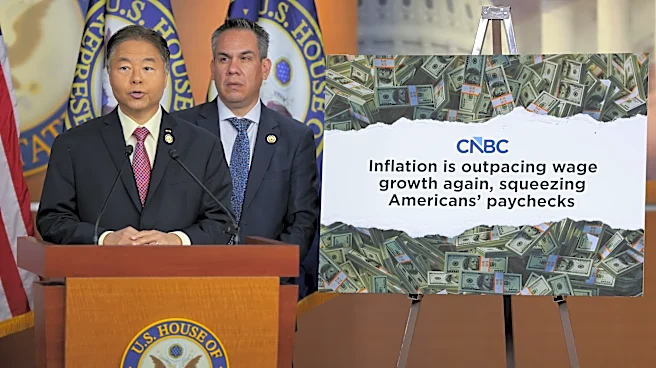
The state's labor force also expanded for the first time in nearly a year and a half, pushing the labor force participation rate up to 61.3%. Despite these positive indicators, working families in Ohio are facing challenges due to rising inflation and slow wage growth. Energy costs, partly attributed to the Iran war and increased electricity demand from AI data centers, are contributing to inflationary pressures. This situation is leading to decreased consumer confidence and an increase in household debt, with credit card balances rising nationwide. In Ohio, delinquent mortgages and foreclosures have increased by 17% compared to the previous year. The public sector, particularly local government employment, was the primary driver of job growth in October, adding 9,500 jobs.
Why It's Important?
The divergence between Ohio's job growth and the financial struggles of its working families highlights a critical economic challenge. While job creation and labor force expansion are generally positive signs for economic health, the impact of inflation on household budgets can undermine these gains. Increased energy costs and slow wage growth mean that many Ohioans are experiencing a decline in their real purchasing power, forcing them to take on more debt to cover daily expenses. This trend of rising household debt and increasing foreclosures indicates a growing financial instability for many residents. If not addressed, this could lead to a broader economic slowdown as consumer spending power diminishes and financial stress mounts. The reliance on public sector job growth, particularly in local government, also raises questions about the sustainability and diversity of job creation in the state.
What's Next?
The Federal Reserve may consider increasing interest rates to address short-term inflation concerns, which could further impact household debt burdens. For Ohio, continued efforts are needed to not only draw more individuals into the labor force but also to connect them with jobs that offer family-sustaining wages. Policy Matters Ohio emphasizes the importance of building an economy that genuinely works for working Ohioans to bolster long-term economic growth. Deeper analysis is required to understand the significant jump in local government jobs, as temporary election work could be a contributing factor, potentially inflating these numbers. The state will need to monitor whether the recent labor force growth is a sustained trend or a temporary anomaly, given the significant losses experienced over the past year and a half.
Beyond the Headlines
The situation in Ohio reflects a broader national economic tension where job market strength coexists with persistent inflationary pressures and stagnant real wages. This dynamic can exacerbate wealth inequality, as those with fixed incomes or lower-wage jobs are disproportionately affected by rising costs. The mention of increased electricity demand from AI data centers as a contributor to energy costs points to an emerging economic and environmental challenge. As technology advances, its energy footprint could become a significant factor in inflation and resource allocation. The reliance on household debt to bridge the gap between income and expenses also raises concerns about long-term financial stability and potential systemic risks if debt levels become unsustainable. This scenario underscores the need for comprehensive economic policies that address both job creation and the cost of living.