








What's Happening?
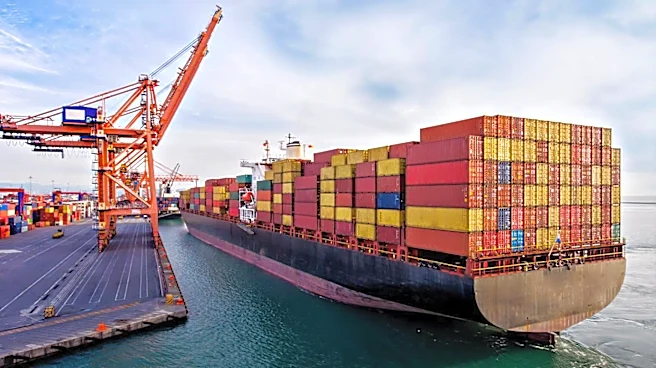
Despite ongoing political tensions between Morocco and Tunisia, Tunisian exporters are increasingly relying on Morocco’s Tanger Med port as a crucial transit hub to access African markets. Anis Jaziri, president of the Tunisian-African Business Council,
stated that Tunisia aims to double its exports to Africa by 2030, targeting 13 billion Tunisian dinars. This strategy involves strengthening the presence of Tunisian companies across the continent. Jaziri highlighted that Tunisian exporters are using intermediary ports like Tanger Med due to the limited direct maritime links between Tunisia and various African markets. Morocco is identified as a major competitor for Tunisian companies in Africa, alongside other global players. The diplomatic strain between the two nations dates back to August 2022, when Tunisian President Kais Saied received Polisario Front leader Brahim Ghali, leading Morocco to recall its ambassador and withdraw from a conference. However, this political dispute has not halted broader economic and human ties, demonstrating a separation between political relations and practical commercial interests.
Why It's Important?
This development underscores the complex interplay between political relations and economic necessities in North Africa. For Tunisia, leveraging Tanger Med is vital for its ambitious export growth targets, particularly as it seeks to expand its economic footprint in Africa. The reliance on a competitor's infrastructure highlights Tunisia's current logistical limitations and the strategic importance of established hubs like Tanger Med. For Morocco, the continued use of its port by Tunisian businesses reinforces its position as a significant maritime and logistics platform connecting Europe, Africa, and other international markets, despite diplomatic disagreements. This situation also illustrates the growing economic competition among North African countries for market share on the African continent. The ability of commercial ties to persist despite political rifts suggests a pragmatic approach by businesses prioritizing market access and economic growth over diplomatic disputes, which could set a precedent for regional economic cooperation.
What's Next?
Tunisia's strategy to double its exports to Africa by 2030 will likely involve further efforts to strengthen its logistics, financing, and commercial capabilities. The Tunisian-African Business Council's proposal for greater cooperation between companies and the creation of sector-based alliances suggests a shift towards more integrated solutions for major African projects. This could lead to Tunisian companies forming partnerships to compete more effectively with countries offering comprehensive packages of design, financing, and implementation. The continued reliance on Tanger Med may also prompt Tunisia to explore developing its own direct maritime links or alternative transit routes to reduce dependence on Moroccan infrastructure in the long term. The ongoing economic competition with Morocco and other global players will necessitate continuous innovation and strategic planning from Tunisian businesses to achieve their export goals.
Beyond the Headlines
The reliance of Tunisian exporters on Morocco's Tanger Med port, despite a significant diplomatic rift, reveals a deeper economic pragmatism that often transcends political disagreements in international relations. This scenario highlights the critical role of infrastructure and logistical networks in regional trade, where established hubs can maintain their importance even amidst political tensions. It also underscores the challenges faced by developing economies in establishing independent trade routes and the strategic advantage held by nations with advanced infrastructure. The distinction between political and commercial interests suggests that economic interdependence can act as a stabilizing force, preventing diplomatic disputes from completely severing vital trade links. This situation could also influence future regional integration efforts, demonstrating that practical economic benefits can sometimes outweigh political grievances, potentially fostering a more nuanced approach to diplomacy in North Africa.