





What's Happening?
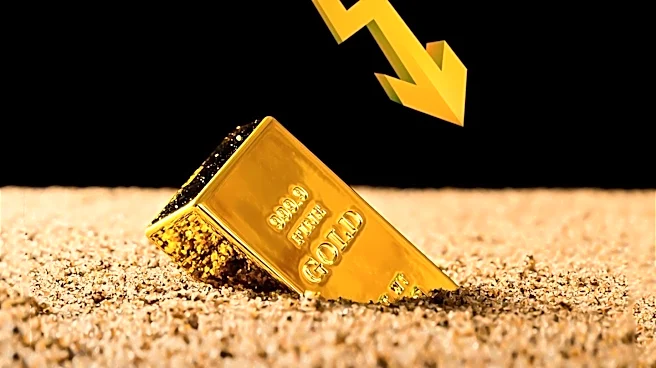
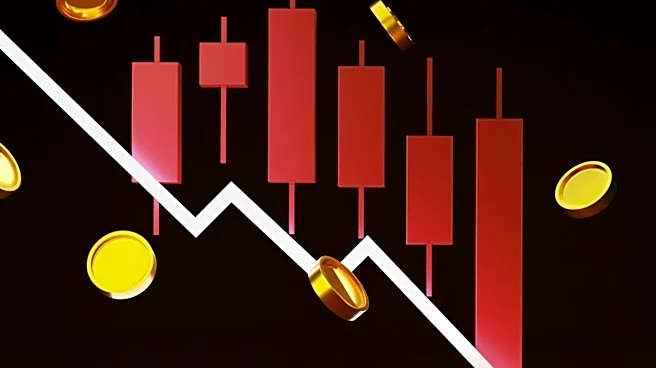
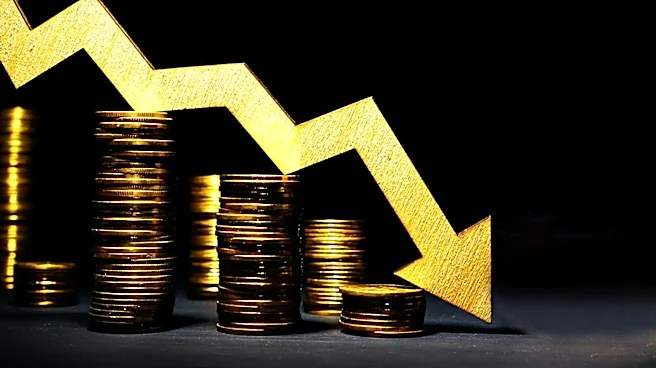
Gold prices experienced a significant collapse, dropping by $600 over nine trading sessions, with a weekly decline approaching 10%. This downturn pushed gold below $3,600 for the first time since September 2025. Silver also saw a substantial drop of approximately
15% during the same week. This sharp decline in gold prices is attributed to several factors, including speculation of a 50-basis-point Federal Reserve rate hike, as floated by Christopher Waller, and a stronger dollar coupled with rising real yields. Goldman Sachs' futures desk research, specifically by Robert Quinn, indicates that the selloff has moved beyond typical macroeconomic fundamentals, suggesting a phase of forced liquidation. The options market also showed extreme dislocations, with three-month gold implied volatility surging to 27.6 from around 19 at the end of October, indicating aggressive repricing of protection costs by investors.
Why It's Important?
The dramatic fall in gold prices signals a shift in market dynamics, moving beyond conventional adjustments to interest rates and currency strength. The indication of forced liquidation, as identified by Goldman Sachs, suggests that investors are selling gold not necessarily due to a loss of faith in its fundamental appeal, but rather out of a need for cash. This distinction is crucial for understanding the market's underlying health and future direction. Typically, gold acts as a safe-haven asset during periods of economic uncertainty or when growth-sensitive assets decline. However, its current behavior, being sold with the same urgency as technology shares, suggests a broader market stress where even traditional safe havens are being liquidated to meet liquidity demands. This could have implications for investor confidence and capital allocation across various asset classes, potentially signaling deeper financial pressures.
What's Next?
The current market conditions suggest that while speculative excess in gold may have been flushed out, the fundamental reasons for owning gold have not significantly changed. The key challenge for investors will be to identify when value begins to reassert itself in the gold market. The extreme dislocations observed in the options market, approaching rarely seen levels, raise questions about whether sellers are nearing exhaustion. If the selling pressure is indeed driven by forced liquidation rather than a fundamental reevaluation of gold, a rebound could occur once liquidity needs are met or market sentiment shifts. However, continued speculation regarding Federal Reserve rate hikes and the strength of the dollar will likely remain influential factors in gold's short-to-medium term trajectory.
Beyond the Headlines
The gold market's recent performance highlights a potential systemic liquidity crunch, where even assets traditionally considered safe havens are being sold off. This phenomenon, if widespread, could indicate underlying vulnerabilities in the broader financial system. The aggressive repricing of protection costs in the options market suggests a heightened level of risk aversion and uncertainty among investors. The divergence from gold's typical safe-haven behavior during a period when oil prices are retreating and growth-sensitive assets are struggling points to a complex interplay of factors, including monetary policy expectations, dollar strength, and potentially unforeseen liquidity demands. This situation could prompt a reevaluation of portfolio diversification strategies and the role of traditional safe assets in times of market stress.